Chủ Nhật, 1 tháng 4, 2018

Auto news on Youtube Apr 1 2018

The air conditioning filter

must be cleaned or changed regularly to maintain air conditioning efficiency.

To remove the filter: Start the engine.

Switch air conditioning to "Recirculate Air" mode,

then then turn the engine switch off.

Open the glove box and remove the separate tray.

Remove the filter cover.

Remove the filter case.

To clean the filter blow compressed air through the filter from the downward side.

Hold the air gun 5 cm from the filter and blow for approximately 2 minutes

Do not clean the filter with water,

as doing so will cause damage to the system.

Make sure that the side marked "Up" is pointing up.

If air flow from the vents decreases dramatically,

the filter may be clogged.

Inspect, clean and replace the air conditioning filter

according to the maintenance schedule.

In dusty areas or areas with heavy traffic flow,

more frequent cleaning may be required.

To avoid possible damage to the air conditioning system,

make sure that a filter is always installed

when using the air conditioning system.

For more infomation >> فلتر المكيف | صنها بنفسك Toyota DIY - Duration: 1:36.

-------------------------------------------

Toyota DIY نظام التحذير | صنها بنفسك - Duration: 1:34.

The Theft Deterrent System is a security system designed

to sound alarms and flash the vehicle's exterior lights

if it detects a possible break-in.

The system is automatically activated

30 seconds after the vehicle's doors have been locked.

Audible alarms may sound, and exterior lights may flash, in the following cases:

When a secured door is being unlocked, or It is being opened by means

other than the vehicle's Smart Entry and Start System

or using the wireless remote control,

in which case the doors are relocked automatically.

When the engine hood/bonnet is opened.

When a window is broken

When a battery cable is disconnected and/or reconnected.

The alarm system is deactivated when:

The doors are unlocked using the Smart Entry and Start System

or the wireless remote control.

The engine is started.

Note that the alarm takes a few seconds to deactivate after the engine is started.

Avoid activating the Double Lock System

when there are people inside the vehicle.

Once activated, none of the doors can be opened from the inside the vehicle.

For more infomation >> Toyota DIY نظام التحذير | صنها بنفسك - Duration: 1:34.

-------------------------------------------

فحص الاطارات | صنها بنفسك Toyota DIY - Duration: 2:00.

Tire care is vital for safety.

Replace tires in accordance with maintenance schedules.

Check the tires for any indicators of wear, such as:

wear on the tire lining up

with the triangle molded into the sidewall of the tire.

The tread of the tire lining up with the treadwear indicators.

Uneven wear, such as excessive wear on one side of the tread.

Noticing any of these signs may require that the tire be replaced.

Rotating your tires approximately every 5000 km in the order shown,

equalizes tire wear and helps extend tire life.

When to replace your vehicle's tires:

Cracks on the tire deep enough to expose the fabric.

Bulges on the tire indicating internal damage.

A tire goes flat repeatedly.

Cases in which damage to the tire cannot be properly repaired.

For your safety and to maintain your vehicle's integrity,

observe the following precautions when replacing tires:

Do not mix tires of different tread patterns.

Do not use tire sizes other than those recommended by Toyota.

Do not mix differently constructed tires.

Do not mix summer, all season and snow tires.

Do not use tires that have been used on another vehicle.

Do not forget to install tire pressure warning valves and transmitters

when replacing tires.

For more infomation >> فحص الاطارات | صنها بنفسك Toyota DIY - Duration: 2:00.

-------------------------------------------

فحص أكياس الهواء | صنها بنفسك Toyota DIY - Duration: 0:59.

SRS airbags are a vital safety component,

therefore, it is imperative to have them inspected and/or repaired

in the following cases:

The front of the vehicle is slightly damaged or deformed.

A portion of a door or its surrounding area is damaged or deformed

due to a minor impact.

The area of airbag inflation is scratched, cracked, or otherwise damaged,

on the pad section of the steering wheel, the side portion of the instrument panel,

the surface of the seats, or roof side rail garnishes.

Contact your Toyota dealer as soon as possible

if any of the SRS airbags have been inflated.

For more infomation >> فحص أكياس الهواء | صنها بنفسك Toyota DIY - Duration: 0:59.

-------------------------------------------

استخدام نظام مراقبة المنظر الخلفي الجزء الأول | صنها بنفسك Toyota DIY - Duration: 1:40.

The rear view monitor system

displays guide lines behind the vehicle to assists the driver while backing up.

The rear view monitor system will activate when the shift lever is in R,

and deactivates when the shift lever is in any position other than R

or when any button on the display is pressed.

Note that the rear-view camera has a limited viewing angle,

and any impact to it or foreign matter adhering to it

may obstruct its view or affect the clarity of the image it transmits.

The rear-view camera uses a special wide-angle lens.

The distance of the image appearing on the screen differs from the actual distance.

The distance guide lines give a distance guide for flat road surfaces

and cannot be used to measure distances

when there are protruding objects in its line of sight.

Rear view monitor system precautions:

Be sure to check that the parking space will accommodate your vehicle

before maneuvering into it.

Be sure to back up slowly, depressing the brake pedal.

Turn off the system

if you feel that there is an increased likelihood of a collision.

Take into account external factors that may affect the system's performance;

such as traffic conditions, road surface conditions, and vehicle condition.

For more infomation >> استخدام نظام مراقبة المنظر الخلفي الجزء الأول | صنها بنفسك Toyota DIY - Duration: 1:40.

-------------------------------------------

مثبت السرعة الراداري | صنها بنفسك Toyota DIY - Duration: 3:47.

In this video, we will learn about dynamic radar cruise control.

Cruise control is used to maintain a set speed

without depressing the accelerator pedal.

To activate cruise control, press the "ON-OFF" button

on the cruise control lever.

When the button is pressed, the cruise control indicator will come on.

Push the lever down to set the speed.

The "SET" indicator will come on.

Push the lever up or down to increase or decrease speed.

Pulling the lever toward you or depressing the brake pedal

cancels the constant speed control.

Pushing the lever up resumes the constant speed control.

The following conditions are unsuitable for cruise control:

In heavy traffic,

on winding roads and on slippery roads.

Cruise control is automatically canceled in the following situations:

Vehicle speed falls more than approximately 16 km/h

below the preset vehicle speed.

Actual vehicle speed is below approximately 40 km/h.

Vehicle Stability Control (VSG) is activated.

If the cruise control speed cannot be set,

there may be a malfunction in the cruise control system.

Have the vehicle inspected by your Toyota dealer.

Dynamic radar cruise control is a subsystem of cruise control

that matches the speed changes of the vehicle in front of you.

Remember that it is simply a system that provides driving assistance

to reduce the driver's burden.

Driving safely is the sole responsibility of the driver.

Situations unsuitable for dynamic radar cruise control:

Roads where there are pedestrians.

In heavy traffic.

On roads with sharp bends.

On slippery roads.

In bad weather.

During towing.

Dynamic radar cruise control determines safe vehicle-to-vehicle following distance

within up to approximately 120 m.

Dynamic radar cruise control is enabled

when a preceding vehicle is detected driving slower than the set speed,

at which point, the system will slow your vehicle down.

If the system is unable to slow your vehicle down,

a warning message will be displayed and the buzzer will sound.

When the road ahead is clear, the system accelerates

until the set speed is reached.

To enable dynamic radar cruise control:

Activate cruise control and set the desired speed.

Press the control button.

Press the button again to select one of the following vehicle-to-vehicle distance:

Long, medium, or short.

To avoid inadvertent activation of the system,

switch the dynamic radar cruise control off when not in use.

The system may not be able to detect these types of vehicles:

Vehicles that cut in suddenly.

Vehicles with small rear ends or extremely high ground clearance.

During rainfall or snowfall.

On roads with sharp bends.

When the steering wheel is turned too frequently.

In any of these cases, you must switch back to normal driving.

For more infomation >> مثبت السرعة الراداري | صنها بنفسك Toyota DIY - Duration: 3:47.

-------------------------------------------

تشغيل مساحات الزجاج | صنها بنفسك Toyota DIY - Duration: 3:26.

In this video, we will learn how to operate

the windshield and rear window wipers and washer.

Use the windshield wiper lever

to control the operation and speed of the wipers.

by moving it up or down.

To control the wipers, select one of the following operations:

Low speed operation.

High speed operation.

Temporary operation.

If you want to spray washer fluid, pull the lever towards you.

During intermittent operation,

you may set the interval for wiper movement

by rotating the circular selector on the wiper lever.

The rain sensor is an optical sensor

that determines the amount of rain falling onto the windshield.

The rain sensor may not operate properly

when sunlight or another bright light strikes the windshield

or if bugs etc. are present on the windshield.

The automatic rain-sensing mode is the default mode.

In this mode, the wipers are switched on and off, speeded up and slowed down

automatically in accordance with rain volume and vehicle speed.

When AUTO rain-sensing is selected,

the wipers will operate once to show that AUTO mode is activated.

You may adjust the sensitivity of the rain sensor

by rotating the selector ring on the wiper lever.

Vehicle speed affects the operation of the wipers when the washer is used.

Washer operation is delayed until after wiping to prevent dripping starts.

This applies to both AUTO and manual modes.

With low speed windshield wiper operation selected,

wiper operation will be switched from low speed to intermittent wiper operation

only when the vehicle is stationary.

If sensor sensitivity is set to maximum,

you won't be able to change the wiper operation.

When the wipers are set to AUTO operation,

take care that your fingers or anything else

does not become caught in the windshield wipers.

You may control the rear window wipers

by turning the end of the wiper lever.

Intermittent operation. Normal operation.

In the same way, you can activate washer/wiper dual operation

by pushing the wiper lever away from you.

Avoid using the wipers in the following situations:

When the windshield is dry, as this may damage the wipers and/or the windshield.

When the washer fluid tank is empty,

do not operate the switch continually

as the washer fluid pump may overheat and get damaged.

When there is no washer fluid spray from the nozzle,

the washer nozzle may be blocked

or the washer fluid tank may be empty.

If the washer nozzle is blocked,

do not try to clear it with a pin or other object.

The nozzle will be damaged.

For more infomation >> تشغيل مساحات الزجاج | صنها بنفسك Toyota DIY - Duration: 3:26.

-------------------------------------------

انظمة استشعار تويوتا الخاصة بالسلامة | صنها بنفسك Toyota DIY - Duration: 3:02.

In this video, we will learn about the Toyota Safety Sense P,

TSSP helps reduce the impact to the occupants and the vehicle

in the case of a collision in normal driving conditions.

The system was designed to operate as a supplementary safety system

under the assumption that the driver will drive safely,

Toyota Safety Sense P is comprised of two sensors:

A radar sensor mounted located behind the front grille,

and a camera sensor mounted behind the windshield.

The system uses readings from these two sensors to operate a group of subsystems:

The Pre-Collision System (PCS).

Dynamic radar cruise control.

Lane Departure Alert (LDA).

Automatic High Beam (AHB).

To ensure the proper operation of the safety and driver assist systems,

observe the following precautions,

To avoid malfunction of the radar sensor,

keep the radar sensor and front grille emblem clean at all times.

Clean the radar sensor and front grille emblem with a soft cloth

so you do not scratch or damage them.

Do not attach any accessories or stickers to the sensors,

including transparent stickers.

Do not disassemble the radar sensor or front grille emblem.

Do not modify or paint the radar sensor, front grille emblem or surrounding area.

To avoid malfunction of the camera sensor and to ensure its proper operation:

Keep the windshield clean at all times.

Do not install an antenna or attach stickers, shades,

or other items to the area of the windshield in front of the camera sensor.

Replace the windshield if it is damaged or cracked.

Do not get the camera sensor wet or allow bright lights to shine into it.

Do not change the installation position or direction of the camera sensor.

Do not disassemble the camera sensor or modify

any components of the vehicle around the camera sensor;

such as the rear-view mirror or sun visors.

Do not install an electronic device or device that emits strong electric waves

near the camera sensor.

If the camera sensor is dirty or damaged, contact your Toyota dealer.

If you need to remove, install, replace, or paint

the sensor, front grille, or front bumper

contact your Toyota dealer.

If the radar sensor or surrounding area has been subjected to a strong impact,

have the vehicle inspected by your Toyota dealer.

For more infomation >> انظمة استشعار تويوتا الخاصة بالسلامة | صنها بنفسك Toyota DIY - Duration: 3:02.

-------------------------------------------

Toyota Avalon 2019 | 2019 Toyota Avalon - Safety and Driver Assistance Review - Duration: 3:40.

Toyota Avalon 2019

2019 Toyota Avalon

2019 Toyota Avalon Review

2019 Toyota Avalon Exterior

2019 Toyota Avalon Features

2019 Toyota Avalon Interior

2019 Toyota Avalon Seat

For more infomation >> Toyota Avalon 2019 | 2019 Toyota Avalon - Safety and Driver Assistance Review - Duration: 3:40.

-------------------------------------------

Toyota DIY صنها بنفسك | EV Mode-وضع الدفع - Duration: 1:20.

The EV drive mode of the Prius hybrid

is a noiseless driving mode

that runs for short distances that range from a few meters to about one kilometre,

depending on the battery's charge level.

The system helps cut fuel consumption,

as the vehicle is powered only by the battery,

while the electric motor is used to drive the vehicle.

You may switch the EV mode on or off by pressing the "EV Mode" button.

Situations in which EV drive mode cannot be turned on:

Vehicle speed is high.

The accelerator pedal is depressed firmly.

The hybrid battery is low.

When driving in EV drive mode, pay special attention to the area around the vehicle.

Because there is no engine noise,

pedestrians or other people in the area may not be aware of the vehicle.

For more infomation >> Toyota DIY صنها بنفسك | EV Mode-وضع الدفع - Duration: 1:20.

-------------------------------------------

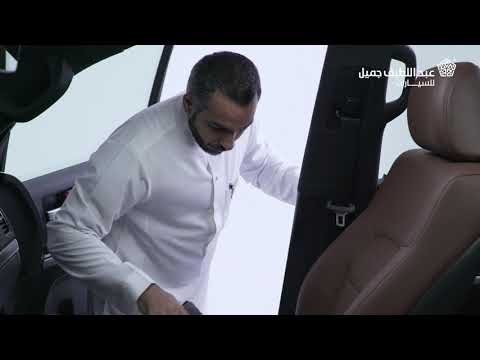
تنظيف السيارة من الداخل | صنها بنفسك Toyota DIY - Duration: 1:52.

It is important to clean the interior of your vehicle periodically to protect it.

Toyota recommends cleaning the interior of the vehicle at least twice a year

to maintain the quality of the vehicle's interior.

When cleaning the interior of the vehicle, observe the following precautions:

Remove dirt and dust using a vacuum cleaner.

Wipe dirty surfaces with a cloth dampened with lukewarm water.

If dirt cannot be removed, clean it with neutral detergent

diluted to approximately 1%.

To clean leather surfaces:

Remove dirt and dust using a vacuum cleaner.

Make sure to wring out excess water before using the piece of cloth.

Use a cloth dampened with a diluted water solution of approximately 5% detergent,

to wipe any excess dirt and dust.

Wipe the surface with a dry, soft cloth to remove any remaining moisture.

Allow the leather to dry in a shaded ventilated area.

Shampooing the carpets:

You can use commercial foaming-type cleaners available

without the use of water.

Use a sponge or brush to apply the foam.

Rub in overlapping circles.

You can clean seatbelts

with mild soap and lukewarm water using a cloth or sponge.

For more infomation >> تنظيف السيارة من الداخل | صنها بنفسك Toyota DIY - Duration: 1:52.

-------------------------------------------

ايقاف السيارة في حالات الطوارئ | صنها بنفسك Toyota DIY - Duration: 1:49.

Only in an emergency, when it becomes impossible

to stop the vehicle in the normal way,

stop the vehicle using the following procedure:

Steadily step on the brake pedal with both feet and firmly depress it.

Do not pump the brake pedal repeatedly

as this will increase the effort required to slow the vehicle.

Shift the shift lever to N.

After slowing down,

stop the vehicle in a safe place by the road.

Stop the engine.

If the shift lever cannot be shifted to N,

Keep depressing the brake pedal with both feet

to reduce vehicle speed as much as possible.

Stop the engine and turn the engine switch to the "ACC" position.

Power assist for the brakes and steering wheel will be lost,

making the brake pedal harder to depress and the steering wheel heavier to turn.

Therefore, decelerate as much as possible before turning off the engine.

Never attempt to remove the key, as doing so will lock the steering wheel.

To stop the engine in vehicles with a smart entry & start system:

Press and hold the engine switch for 2 consecutive seconds or more,

or press it briefly 3 times or more in succession.

Stop the vehicle in a safe place by the road.

For more infomation >> ايقاف السيارة في حالات الطوارئ | صنها بنفسك Toyota DIY - Duration: 1:49.

-------------------------------------------

سائل تنظيف الزجاج | صنها بنفسك Toyota DIY - Duration: 1:07.

It is important to inspect the windshield washer fluid periodically.

Inspect the windshield washer fluid if any washer does not work

or the warning message appears on the multi-information display.

If the washer fluid warning indicator light comes on,

the washer fluid reservoir may be empty,

in which case you must add washer fluid.

Do not add washer fluid while the engine is hot or running

as washer fluid contains alcohol

and may catch fire if spilled on the engine,

and if spilled on any of the internal component inside the vehicle,

this may cause streaking on the vehicle's painted surfaces.

For more infomation >> سائل تنظيف الزجاج | صنها بنفسك Toyota DIY - Duration: 1:07.

-------------------------------------------

حجرة الامتعة | صنها بنفسك Toyota DIY - Duration: 0:55.

Your vehicle's luggage compartment comes with a set of useful features.

Cargo hooks: Provided for securing loose items.

Raise the hook to use.

Always return the cargo hooks to their positions when not in use.

Storage compartment: remove the cover to use.

Make sure to keep the auxiliary box always closed to avoid damage or injury.

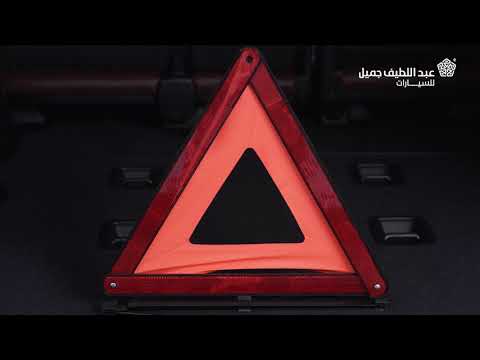
Warning reflector holder:

First-aid kit holder.

Do not allow children to climb on the luggage cover,

to avoid serious injury to the child or damage to the cover.

For more infomation >> حجرة الامتعة | صنها بنفسك Toyota DIY - Duration: 0:55.

-------------------------------------------

المقاعد | صنها بنفسك Toyota DIY - Duration: 2:18.

In this video, we will learn about some of the key features of the seats.

For electronically controlled seats, use the following controls:

Seat position adjustment switch.

Vertical height adjustment switch.

Seatback angle adjustment switch.

Lumbar support adjustment switch.

Driving position memory:

This feature automatically adjusts the driver's seat, steering wheel,

and outside rear view mirrors according to pre-programmed settings

to make entering and exiting the vehicle easier or to suit your preferences.

To record driving positions in memory:

Make sure that the engine is running, and check that the shift lever is in P.

Adjust the driver's seat, steering wheel, and outside rear view mirrors

to the desired positions.

Press the "SET" button and then press one of these buttons until the signal beeps.

To recall a preprogramed position,

Press the preprogrammed button to recall the desired position.

To tumble the second seats:

Pull the lock release lever and swing the whole seat up and forward.

Hook the holding strap to the assist grip

and secure the seat by pulling its free end.

Folding up the third seats:

Stow the seat belt buckles

and lower the outside head restraints to the lowest position.

Fold the third seatbacks.

Push the seatback angle levers.

Pull the seat leg lock release levers.

Remove the seat hook covers from the back of the seat cushion,

and install them on the seat hooks.

When returning the third seats to their original position,

fix the backseat handle securely in its original position.

For more infomation >> المقاعد | صنها بنفسك Toyota DIY - Duration: 2:18.

-------------------------------------------

الجزء الثاني - SUV سحب المقطورة | صنها بنفسك Toyota DIY - Duration: 3:12.

Trailer lights precautions:

Check that the turn signal lights and stoplights are operating correctly

every time you hitch up the trailer.

Directly wiring up to your vehicle may damage the electrical system.

Avoid towing trailers with a new vehicle for the first 800 km.

Safety checks before towing:

Check that the maximum load limit

for the towing hitch/bracket hitch ball is not exceeded.

Make sure that the total load exerted on the vehicle

is within the range of the weight limits.

Ensure that the trailer load is secure.

If the traffic behind cannot be clearly seen with standard mirrors,

supplementary outside rear view mirrors should be added to the vehicle.

Make sure that the trailer ball is set up at the proper height

for the coupler on the trailer.

Retighten all bolts securing the hitching ball and bracket

after towing for approximately 1000 km.

If trailer sway occurs observe the following precautions:

Firmly grip the steering wheel and steer straight ahead.

Begin releasing the accelerator pedal very gradually to reduce speed.

Do not abruptly depress the brake pedal.

Important tire information:

Ensure that the tires on your vehicle and the trailer are properly inflated.

Stop in a safe place.

Get all occupants out of the vehicle.

Check the tires of the vehicle and the trailer.

Check the load in the trailer

and ensure that the load is evenly distributed inside it.

Make sure the vehicle is not overloaded after occupants get in.

Remember that swaying of the towing vehicle-trailer

increases as speed increases.

Important points regarding turning:

The wheels of the trailer will travel closer to the inside of the curve

than the wheels of the vehicle.

To make allowance for this, take the turns wider than you would normally do.

When parking the vehicle, observe the following precautions:

Firmly set the parking brake.

Shift the shift lever to P for automatic transmissions,

and 1 or R for manual transmissions.

For more infomation >> الجزء الثاني - SUV سحب المقطورة | صنها بنفسك Toyota DIY - Duration: 3:12.

-------------------------------------------

تنظيف السيارة من الخارج | صنها بنفسك Toyota DIY - Duration: 1:58.

There are various ways to clean your vehicle.

To protect your vehicle and keep it safe, observe the following precautions:

For hard-to-remove marks, use car wash soap

and rinse thoroughly with water.

After washing the vehicle, wipe away any water.

Wax the vehicle when the waterproof coating deteriorates.

Wash the vehicle body using a sponge or soft cloth.

When washing the vehicle at an automatic car wash,

fold the mirrors back before washing the vehicle

and start washing from the front of the vehicle.

Note that brushes used in automatic car washes

may scratch the vehicle surface.

When using high-pressure water guns to wash the car,

check that the fuel filler door on your vehicle is closed properly.

When pouring water on the vehicle, work from top to bottom,

making sure not to allow water to enter the engine compartment.

Avoid pointing the high-pressure water stream

directly at the windows or surrounding seals and trim.

When washing the aluminum wheels, use only a pH-neutral detergent.

Do not use hard brushes or abrasive cleaners.

Avoid washing the vehicle or applying cleaning solutions

while the vehicle surface is hot.

For vehicles with the Smart Entry and Start System,

The door may lock and unlock repeatedly, if the door handle becomes wet

while the electronic key is within the effective range,

Place the key in a position 2 m or more separate from the vehicle

while the vehicle is being washed.

For more infomation >> تنظيف السيارة من الخارج | صنها بنفسك Toyota DIY - Duration: 1:58.

-------------------------------------------

نظام القفل المزدوج | صنها بنفسك Toyota DIY - Duration: 1:33.

The double locking system is a security system

that disables the door unlocking function

from both the interior and exterior of the vehicle.

Vehicles employing this system have labels on the window glass of both front doors.

To set the double locking system:

Turn the engine switch off.

Have all the passengers exit the vehicle.

Ensure that all the doors are closed.

For vehicles equipped with the Smart Entry and Start System:

Touch the sensor area on the outside door handles twice within 5 seconds.

For system unequipped with the Smart Entry and Start System:

Press the lock button on the wireless remote control twice within 5 seconds.

To cancel the double locking system:

For vehicles equipped with the Smart Entry and Start System:

Hold the outside door handle on the driver's side.

For vehicles without the Smart Entry and Start System:

Press the unlock button on the wireless remote control.

Never activate the double locking system when there are people in the vehicle

because all the doors cannot be opened from inside the vehicle.

For more infomation >> نظام القفل المزدوج | صنها بنفسك Toyota DIY - Duration: 1:33.

-------------------------------------------

مستشعر التحكم بالمصابيح الامامية | صنها بنفسك Toyota DIY - Duration: 4:53.

The Headlight Control Sensor

is located on the dash board in front of the driver's position

and turns your headlights on and off based on ambient light levels.

The sensor may not function properly if an object is placed on the sensor,

or anything that blocks the sensor is affixed to the windshield.

This sensor helps operate a number of automatic headlight functions.

Automatic light off system:

This system turns off headlights and tail lights automatically

when the driver's door is opened after switching the engine off.

Automatic headlight leveling system:

The level of the headlights is automatically adjusted

according to the loading condition of the vehicle

to ensure that the headlights do not interfere with other road users.

Light reminder buzzer:

A buzzer sounds when the engine switch

is turned to ACCESSORY mode or turned off

and the driver's door is opened while the lights are turned on.

If the automatic headlight leveling system indicator light flashes,

this may indicate a malfunction.

If this occurs, visit your Toyota dealer.

Automatic High Beam:

The Automatic High Beam uses an in-vehicle camera sensor

to assess the brightness of lights on the road,

and automatically turns the high beam on or off as necessary.

When activating Automatic High Beam, observe the following precautions:

Avoid touching the camera sensor.

Do not subject the rear-view mirror or the camera sensor to impacts.

Do not attempt to disassemble the camera sensor.

Do not spill liquids onto the rear-view mirror or the camera sensor.

Do not place any objects on the instrument panel.

Do not overload the vehicle.

Do not use anything but a genuine Toyota products when replacing the windshield.

Activating the Automatic High Beam system:

Put the headlight switch in the "AUTO" position and push the level away from you.

Press the Automatic High Beam button.

The high beam will be automatically turned on

when all of the following conditions are fulfilled:

Vehicle speed is above approximately 40 km/h.

The area ahead of the vehicle must be dark.

There are no vehicles ahead with headlights or tail lights turned on.

If the area ahead of the vehicle is not dark

or there are many streetlights on the road ahead,

the high beam will be automatically turned off.

The high beam may be turned off

if a vehicle ahead that is using fog lights

without using the headlights is detected.

The high beam may not be automatically turned off in the following situations:

When oncoming vehicles suddenly appear from a curve.

When the vehicle is cut in front of by another vehicle.

When vehicles ahead are hidden from sight

due to repeated curves, road dividers or roadside trees etc.

When vehicles ahead have no lights.

In some situations, the sensor may not be able

to accurately detect surrounding brightness levels,

this may cause the high beams to be unnecessarily turned on

or cause the low beams to remain on even though high beams are necessary.

In these cases, manually switch between the high and low beams.

Examples of such situations:

Bad weather.

The windshield is cracked or obscured by fog or mist.

The inside rear view mirror is dirty.

The camera sensor temperature is extremely high.

Surrounding brightness levels are equal to those of vehicle lights.

Vehicles ahead have headlights that are either switched off.

Driving through an area of intermittently changing brightness and darkness.

When driving on a winding road

There is a highly reflective object ahead of the vehicle.

The vehicle is tilting due to overloading.

The high beam and low beam are repeatedly being switched between

in an abnormal manner.

Không có nhận xét nào:

Đăng nhận xét