Subscribe Now & Stay with Us
Thanks for Watching
-------------------------------------------
Facial recognition software among FBISD potential security upgrades - Duration: 2:42. For more infomation >> Facial recognition software among FBISD potential security upgrades - Duration: 2:42.
 -------------------------------------------
ATM MACHINE SWIPING SOFTWARE HACKED - Duration: 0:53.
SHARE WITH YOUR FAMILY FRIENDS
-------------------------------------------
Aerospike CNoSQL Database Software Benefits from Intel® Optane DC Persistent Memory | Intel Software - Duration: 1:40.
Aerospike is a database company.
We serve companies trying to put together front-edge systems
that really delight customers.
The ability to store data in a database is one thing.
But to be able to retrieve it rapidly is the other portion.
Our customers require a database that
is capable of terabytes of storage
and submillisecond database accuracy.
With Intel Optane DC Persistent Memory,
we now have a technology that is capable of solving indexing
problems at a high level of density.
This allows the capability to build different indexing
strategies for databases.
This means that finding more specific data
is more efficient, thus allowing creation of finer-grained
and more powerful applications.
Our necessity at the front edge to provide
more personalized information to support machine learning
has really driven incredible increases of scale.
As big data volumes have gotten bigger,
our customers need terabytes of indexes.
Being able to provide a fast index
database with persistent memory allows big data technologies
and machine learning to become practical.
We've been working with Intel for nearly two years,
looking at the different optimizations.
With Intel Octane DC Persistent Memory,
Aerospike is able to provide great benefits to customers,
index more data, provide cheaper and more powerful
database technology.
The capabilities of this technology
are practically endless.
[MUSIC PLAYING]
-------------------------------------------
¿Cómo publicar fotografías en Instagram desde el PC sin software? - Duration: 2:45. For more infomation >> ¿Cómo publicar fotografías en Instagram desde el PC sin software? - Duration: 2:45.
 -------------------------------------------
Cake Projection Mapping Tutorial (Using Free Software) - Duration: 18:06.
Welcome to this tutorial on how to projection map a cake. If you've projection
mapped before then some of this might be a little tedious for you because I
really will be starting with the basics and giving a lot of detail about all
aspects of this process. You may have seen Luma Bakery's videos on this
channel, if you haven't, check them out. I've offered this service professionally
for over two years but I'm now moving away from this and focusing more on
teaching others how to achieve this technique and building a cake mapping
community and creating different more creative cake mapping projects for
others to try themselves. This tutorial will use free software
called MapMap. In the past where I've cake mapped on commercial projects I've
used Qlab and MadMapper but these are paid-for pieces of software so if you're
trying this for the first time, you're playing around, or you're doing a one-off
project, maybe you've borrowed a projector, you might not want to pay for
software. If you'd be interested in learning about my Qlab/MadMapper
workflow and also using multiple projectors, let me know in the comment
section and I can put together a tutorial. In the description I've
included a link to some resources you can download for free which includes a
MapMap scene that's already been set up, you just need to map it to your specific
cake - that's if you don't want to go through these steps yourself, although
I'd recommend that you do give it a try. I've also included the video content
which you are free to use for your personal projects. I've also listed all
the hardware and equipment I'm using, including the make and model of the
projector down below. In order to successfully cake map you're obviously
going to need a cake. Mine was made for me by a professional baker, you might
want to get a professional to make yours. If you wanted to create a full dummy
version yourself you're going to need styrofoam dummies covered in white
fondant icing, links to these materials are below. The cake I've always worked
with has five tiers, all five inches high, starting with an 8-inch square base at
the top then getting larger by two inch increments as you go down: so 10 inches,
12 inches, 14 inches, with 16 inches at the bottom. These are the dimensions that
are going to work with the content provided here, or a version that you
scale proportionally with these ratios. You might also just want to project onto three or four tiers, that would work too.
A few things to note are that even
though they are polystyrene inside they are very heavy especially the largest one
so transporting them and moving them
around can be tricky. They do keep. I've had these for two and a half years now,
but they are really showing their age with some marks and discoloration and
I'd consider these well past being acceptable for a paying job. One thing I
found is that the icing sweats over time. Another baker has recommended a type of
fondant icing that is designed for tropical temperatures and would be more
resistant to this problem in the long run. I've put the link to that icing down
below. For commercial jobs - weddings for example - where the couple wants to cut
the cake at least one tier has to be real. To keep things simple for me and
most cost-effective for the client, I would tend to offer the top 8-inch tier
as real cake and the remaining four tiers as dummies and then provide
however many slices of cut cake were needed to make up the numbers beyond
what you get from the top tier which is about 35 to 40 wedding portions or 16
dessert portions. You'll find that the edges and corners of real cake are
softer and you won't have as crisp lines to work with as you do on the dummies
which is another reason to use fake cake where possible. The projector I'm using
is a short throw, 2200 lumen projector by Ben Q. It's been discontinued now and
superseded by another model which I've linked to below. I really like this
projector and it's served me really well. One thing I really like is that it has a
six speed color wheel which reduces the rainbow effect you get with some
projectors and produces really rich bright colours. Like I said, it has a short
throw lens which is what I wanted for the setup I was going for. That means it
can be much closer to the projected surface than a typical projector you
might use for a home cinema. You maintain a lot of brightness by projecting from
close range and it's harder for people to get in the way of the projections if
you're setting the projector up on a tabletop, not rigging it overhead on a
truss, for example. I personally wasn't interested in using trusses because
they're more of a challenge logistically and I think they can sometimes be
unsightly and imposing on a space. There are some disadvantages
though to projecting from close quarters rather than from overhead
such as the risk of the audience knocking the projectors so you'll have
to decide what works best for you. I want to talk briefly about the image asset
I've provided called numbered UV. This is something that's going to help us during
the mapping phase. It might look confusing at first and this is a more
sophisticated approach than is actually needed, but I believe it's good practice
to get the most out of your projector and make your projections look the best
they can be. The reason it's set up like this is to
maximize the number of pixels we're utilizing within the projector's
resolution. My projector is full HD also known as 1080p which means it has a
resolution of 1920 by 1080 pixels. I want to put as many of those pixels to work
by splitting apart the tiers and packing them as efficiently as possible within
the 1920 by 1080 space. If you're confused it will become clear in a
moment. The tiers are numbered 1 to 5, with one at the top and 5 at the bottom
to help you know which section of content is going on which surface of the
cake. Time to set up the projector. You can mount the projector on a tripod or
just sit it on a table. I use a free-standing plinth I built myself for
this purpose. You want to set up the projector far enough away so that
projected light covers the cake from top to bottom, but near enough, again, so as to
take advantage of all the pixels the projector has to offer. As for how far
away to set up the projector from the cake, you can work this out by trial and
error by moving the projector nearer and further away, or if you're not afraid of
a bit of maths, look at your projector's specification and find out it's throw
ratio. This number represents the distance of the projector from the
surface, divided by the width of the projected image in meters.
The smaller the throw ratio number, the closer your projector can be to the cake.
For example, as I said my projector has a short throw lens and its throw ratio is
0.69 to 0.83. It has a range because its lens has an
optical zoom. Though many lenses are fixed so you'll only have one number to
work with. To work this through with my own projector as an example, I'll take
the smaller number and I know that that equals the minimum distance the
projector can be from the cake, divided by the width of the projected image. Now
I have five tiers, each five inches high, so the cake has a
total height of 25 inches or 0.635 meters. I also know that the aspect ratio
of the projector is 16:9, that's a ratio of the output's width to its height.
That means for every 16 pixels of video has in width, there are 9 pixels in
height. I you're still with me, for a piece of video content 0.635
meters high like ours needs to be it will be 1.13
meters wide. To get the distance between the cake and my projector, I plug this
into the equation and I discover that I can project from 0.78
meters from the cake. Trial-and-error is obviously less
complicated and fine for most people, but sometimes you can't scout out an event
location beforehand, or you don't have lots of set-up time on the day and it's
good to plan ahead and know how long your cables need to be, for example. Some
projectors can be turned on their side and project in portrait mode. This would
actually be better for us because our cake is taller than it is wide.
However my projector isn't designed to do this so I've kept it landscape.
Plug your projector into a power source and turn it on. Connect it to your laptop or
computer. I'm using a MacBook Pro, specifications below, which is powerful
enough even for heavy content and outputting to multiple projectors. I'm
using a mini DisplayPort to HDMI cable which goes in the back of the projector
in HDMI slot one. It's useful to turn off any lights and reduce ambient light at
this point so you can see the projection better now that it's time to start mapping.
The first thing to mention is that I will be working on a Mac so some of these steps,
especially when setting up the projector and your display, might be a little bit
different for you if you're working on a PC, for example. But if you are on a Mac,
you want to come down here into System Preferences and go to Displays I can
already see my projector here it is BenQ and I want to make sure it's optimized
for it and not my laptop's display. In Arrangement I want Mirror Displays
turned on in the documentation for MapMap it actually says that it doesn't
want Mirrored Displays on but I found that actually this is the way to make it
work. So opening up MapMap and this is what we see: not very much. And the first
thing that I want you to do is to come up here into the top left and click on
this little piece of film "import a video or image file" and I want you to bring
two things in the first thing is this "numbered UV" image that we've talked
about before, here it is now sitting in your library, and the second thing is the
video we actually want to put onto the cake so "cake mapping projected content"
and there they both are in your library but you don't see anything in either of
your editors yet until you press Add Mesh Layer here this plus on top of a
rectangle. So here's the particle cascade that we're going to be putting on a cake
you can pause and play it over here on the top right and here in the inspector
we see its source is the "projected content" if we change that to "numbered UV"
then we see this instead. If you haven't done any mapping at all before
then a basic idea really is to use this bounding box to isolate sections of the
video so that we can manipulate just that section onto an individual surface
separate from the other portions of the video just by moving these corner
handles around you can see we're manipulating the output so that we can
stick it to the corners of our surface that we've chosen in this case it's the
front face of the bottom tier on the left.
Now just a couple of things about working inside MapMap, if you can't see
these handles or if you can't see the crosshairs then you want to come up here
to View and just toggle on Display Controls and then you will be able to
see them. Another thing working inside the input
editor or inside both editors if you want to zoom in and out you can do using
the scroll wheel of your mouse if you have a mouse that has a scroll wheel
alternatively you can use the plus and minus magnifying glasses just on the
toolbar there of both editors. Also MapMap has various modes that you can use
to manipulate these handles and the bounding box around the video;
We're in Move currently so we're moving these handles that can be accessed
through the hotkey M. If you maybe want to scale the bounding box with the
hotkey S you can do that or R is rotate. Alternatively, if you actually click
inside the bounding box you cycle through the different modes so you would
just click repeatedly until you're on the mode that you want. Let's start as we
mean to go on by renaming our first mesh "left five" just so that we can work cleanly
and we know what we're doing. Now I want to zoom right in and I just want to make
these corners as neat as they possibly can be so we're not leaving any of the
content overhanging or leaving it outside our box but we're also not including any
black borders or any slivers of the black content that we don't want so actually
something I should have said before is that if the software hasn't
automatically detected your projector when you toggle full screen and output
your content, you want to come up here into View and output screen you want to
make sure that your projector is set to the primary output and not your laptop
or computer's display. Okay so now in the output editor I'm
going to use these handles just to move these around and make sure they're
really precisely positioned on the cake I don't want it spilling on to any of
the other surface, I don't want it going over the lip of the cake and I also
don't want any light on the back wall because that will be distracting and not
what we want. Okay so I'm happy with five and I'll move on to four so we can
duplicate "left five" because it's much the same just a rectangle box and rename
it "left four" and just zoom out so that we know what we're looking at a little
bit better, so four is over here and it's rotated 90 degrees clockwise so we want
to rotate five ninety degrees clockwise and then we'll just move it over on top
of four and simply go through the same process again of just moving these
handles so that they snugly fit around the content that we want to put onto four
Okay so when we're happy with four we'll do exactly the same thing: duplicate left
four, rename it "left three", simply move it across, tweak the handles so that they
fit around tier three and just move those handles ever so slightly just so
that they fit around content box three, output onto the cake and move those
handles until we're happy.
Now I think you get the idea
so I'll just fast forward a little bit whilst I do the two remaining tiers on the left side.
Okay so I'm happy with that all on the left, I'll just rename this "left one" and
the beauty of the content we're using the particle cascade is that all the
content on the left can be mirrored over on to the right so if we duplicate left
and name it "right one" all we need to do is take this box here and mirror it over
onto the right. Now I found the software to be a little bit funny about doing
this, so I found a method that worked for me was taking these two left hand
handles and bringing them close in like this to the right hand handles
and then I found that the remaining ones sort of pop over to the
other side and then suddenly the software's happy for you to do that so
if you try and follow my method what I just did I don't think you should have a
problem. So there we have it, it's now reflected on to the other side it's a
mirror image so it's exactly the same as before just tweak the handles except for
the right-hand side and then we just move down the cake doing exactly the
same as before.
So there we are each front face of each tier has its own piece of content
exactly like we wanted. So now probably what you want to do is
just go in here and finely tune your handles and your mapping just so that
you're happy with it and it's as precise as you want it to be. If I was doing this
on a real job I'd really take care at this stage I want it to look good and I
don't want any stray bits of content getting onto the walls or getting onto
any surfaces where they shouldn't be so I'd really take care in this stage I'll
be fairly quick now for the purpose of this tutorial but you really just want
to go through each one and just really make sure things line up. Once that's
done you want to save your file we don't want to lose all of our good work so I'm
happy to keep this name I'll just save over one that I did earlier. And now all
that's left to do is down here in our source is to change it back from "numbered
UV" back to the particle cascade. So we've done that for "right five" mesh and we
will just go through and do that for all the others now.
Okay that's done. So with any luck if we play the footage and then output it to
a projector - whoops okay - we can see what we've forgotten to turn off which is up
here in View, toggle off those Display Controls. They were useful before but now
we don't want to see them anymore. Play our content and there it is on our
cake looking beautiful. So congratulations, you've mapped a cake.
This content is looped so it will just go round and round until you want to
turn it of. If you've enjoyed this, please subscribe and like this video.
Have fun and happy cake mapping.
-------------------------------------------
Why has Minster Grange been using Person Centred Software? - Duration: 2:12. For more infomation >> Why has Minster Grange been using Person Centred Software? - Duration: 2:12.
 -------------------------------------------
Apple transitioned to a recurring revenue software business: Mitchell Green - Duration: 5:45. For more infomation >> Apple transitioned to a recurring revenue software business: Mitchell Green - Duration: 5:45.
 -------------------------------------------
How make Snake Game Software in C Language in Window-10 - Duration: 7:40.
music
-------------------------------------------
Viewpoint Construction Software Integration with Business Information Group (BIG) - Duration: 3:05.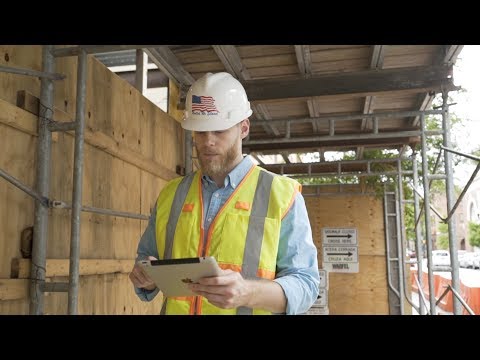
Keeping track of your growing construction company can be difficult.
The growing pains experienced by new larger projects, increased staffing and
more complex processes can result in confusion and lost revenue. By switching
to a fully integrated ERP tool, you can streamline your processes, improve
collaboration and create better systems for tracking your team, projects and
costs. We were so fractured and so antiquated even our payroll system prior
to Vista that was supposed to be specialized in construction couldn't
handle construction payroll. We got Viewpoint to kind of get us all talking and
collaborating. So we use it for a project management, we use it for job cost,
accounting, HR, payroll, equipment management, inventory, pretty much most of
the modules we have, we're using it. Viewpoint is the construction
industry's leading suite of management software uniting accounting management,
project management and collaboration between teams. Viewpoint gives you
tremendous value in terms of efficiency, accuracy and speed. As it turned out, BIG
was literally right down the road and when I was talking with Viewpoint I
said hey this would be really important for us to have local support, it just
fit like a glove at that point and then as we got into implementation, just
the product that they gave us to support Vista was just phenomenal. I'm so happy
that that's the direction we went. At Business Information Group we spent the last
25 years supporting the construction industry and 17 years in partnership
with Viewpoint. By implementing and customizing Viewpoint for hundreds of
construction companies across the country, our team of 30-plus has
developed the experience and skill to tailor viewpoint to your particular
needs. Over 50% of the clients that we work with are in the construction
industry so not only do we know the product but we understand their business.
When you look at a standard construction company they're probably using 8, 10, 12,
15 maybe different softwares to be able to accomplish that. Viewpoint kind of
gives you that full suite of solutions to be able to start a project and take
it through completion. I'm super happy I chose BIG. They're there to help and they
were very anytime I had a question and would reach out to one of the
implementer's, there was a quick response and quick to get back to me. I would
seriously consider using BIG if you're gonna implement Vista.
The biggest thing is at the end of the day it's the construction company's job to
deliver a project on time and on budget. So if your employees don't have access
to real-time data, how are they making good decisions and how are you going to
deliver your projects on time and on budget?
To see how viewpoint can transform your
construction company, contact Business Information Group today.
-------------------------------------------
Suite Archimede HR - Software per il workforce management nell'industria 4.0 - Duration: 1:17. For more infomation >> Suite Archimede HR - Software per il workforce management nell'industria 4.0 - Duration: 1:17.
 -------------------------------------------
Why Redis* Labs Embraces Intel® Optane™ DC Persistent Memory | Intel Software - Duration: 1:38.
Redis Labs is the company behind the popular open source
Redis, an in-memory NoSQL database downloaded
over a billion times.
We have over 8,000 enterprise customers.
In-memory databases tend to be expensive because RAM
is more expensive than disk.
The beauty of persistent memory is
that it allows you to extend use cases for things that before,
you couldn't have put in in-memory database
because the price and the cost associated
with managing this infrastructure
was very, very high.
The fact that Redis can utilize this new technology
and provide in-memory experience at a fraction of the cost, this
is the main benefit for our customers.
Everyone is looking for an instant response time.
Instant response time means less than 100
millisecond from the time you click
the button until you get a response from your application.
With Intel Optane DC persistent memory,
you can now practically put your entire data
on an in-memory database and enjoy
this sub-millisecond latency for your application performance.
Now we have a way to extend the RAM with something
that runs at approximately the same performance,
but much more cheaper to use.
This is why persistent memory's very important for us
and for our customers.
We believe that next generation server architecture will
be all with persistent memory.
This is going to change the entire database market.
[MUSIC PLAYING]

Không có nhận xét nào:
Đăng nhận xét