Thứ Bảy, 3 tháng 3, 2018

Auto news on Youtube Mar 3 2018

Antonio Criminisi: Look, our work is very, very practical.

We want to develop technology to help oncologists, radiologists and, eventually surgeons, as well.

That's all. So, it is a productivity tool.

They are not the type of AI that people say will take over the world at all.

They are just very practical, concrete tools to help reduce cost and save time.

(Music plays)

Host: You're listening to the Microsoft Research podcast.

A show that brings you closer to the cutting-edge of technology research and the scientists behind it.

I'm your host, Gretchen Huizinga.

(Music plays)

Host: With all the sensational headlines about artificial intelligence, it's reassuring

to know that some of the world's most brilliant minds are developing AI systems for entirely

practical reasons.

One of those minds belongs to Dr. Antonio Criminisi, a Principal Researcher at Microsoft

Research in Cambridge, England.

And one of those reasons is to help medical professionals provide better

healthcare for their patients.

Today, Dr. Criminisi talks about Project InnerEye, an innovative machine learning tool that helps

radiologists identify and analyze 3-D images of cancerous tumors.

He also gives us some insight into his work on deep neural decision forests and tells

us how gaming algorithms made their way into medical technology, moving from gamer to patient,

and turning outside-in imaging… inside-out.

That and much more, on this episode of the Microsoft Research Podcast.

(music)

Host: Thanks Antonio, again for joining us from MSR Cambridge in the UK via Skype.

It's great to have you with us.

Antonio Criminisi: No problem. Thank you.

Host: So, you're a principal researcher on InnerEye AI for cancer which uses machine

learning algorithms to treat cancer.

So, give us an overview of the work you are doing in computer vision and medical imaging

analysis.

Antonio Criminisi: Sure, my pleasure.

So, what we do in project InnerEye is, we apply state-of-the-art machine learning technology

for the analysis of radiological images.

In particular here, we're talking about CT as in Computer Tomography, and MR as in

Magnetic Resonance images.

And we're looking, specifically, at images of patients who have already been diagnosed

with some form of cancer, unfortunately.

And what the technology does is, analyzes those images, at a pixel-by-pixel level, to

figure out exactly where the tumor is.

But also, to do what's called the delineation or contouring, of organs around the tumor.

They are called organs-at-risk.

And the reason why this is important is because, for instance, in radiation therapy, you need

to instruct the machine that delivers the radiation, the therapy, to exactly where the

target is, i.e., the tumor, but also the organs that need to be spared from nasty radiation.

This is normally a process that is done manually, with somewhat archaic tools.

And we can help, precisely in that area, to make the delineation, the contouring, and

therefore, the radiotherapy planning, a lot quicker and also more cost-effective.

Host: So tell us how gaming technology algorithms are now working in medical technology.

How did you go from gamer to patient and inside-out imaging to outside-in imaging?

Antonio Criminisi: Sure.

So, our expertise is in machine learning.

So, for a decade or more, we've been working on experimenting with new, better, more efficient,

more accurate machine learning algorithms for doing predictions from images.

And those are pretty much any type of images.

It could be your holiday snaps, it could be videos, or it could be medical imaging.

So, when we were working on the technology, we developed some algorithms which turned

out to be both accurate and particularly efficient.

And at that moment, we thought, "Hey, if these algorithms work on decked images from

the outside of a person, in that case a player, perhaps they can also work on images where

we are looking at the inside of a patient body in that case."

And that's where the project, you know, was born, really.

Host: So, what are the unique challenges that radiologists and clinicians face that your

work helps address?

You mentioned delineation earlier.

You also talked about quantification at one point.

Can you talk about how your work has an impact on these two big ideas?

Antonio Criminisi: Yes, absolutely.

So, there are many medical experts in modern hospitals who are faced with a number of issues,

and normally they spend an enormous amount of time trying to tackle those issues.

In particular we already mentioned the work of radiation oncologists where they need to

delineate, with great accuracy, the tumor and the organs-at-risk so that they can deliver

safe and effective, you know, therapy.

In this case we're talking about radiotherapy.

On the other hand, there is radiologists who have got a very different role.

In most cases, radiologists, they look at images of patients and they need to assess

what they are looking at; the disease, not only the type of disease, but also whether

the disease is progressing over time or it is responding to the treatment.

And, unfortunately, nowadays, they do not have very good tools for doing the latter,

this, you know, assessment and the quantification of the disease.

There are no very good quantification tools where you can actually measure, say, the volume

of the tumor from a radiological image.

And that's where we can help. That's the idea.

That potentially our technology can be embedded within a radiologist's workflow and help

translate those radiological images into measuring devices.

That's our goal, turning those images into measuring devices where the radiologists can

actually write in the radiological report, "This is how big the tumor is today.

This is how big it was last week.

This is how big it was two weeks ago."

And so, they can then plot the path of progression of the disease with great accuracy and rigor.

Host: And that's super important in treating cancer, is to see how aggressive tumors are, yeah?

Antonio Criminisi: Yeah, absolutely. That's just one of the examples.

Where, also, it could be used for instance to figure out which drug works best, right?

So, if I'm trialing different drugs, I want to know which one is more effective, faster-acting,

and so on. Those are just some of many possible examples.

Host: You know, it's such a fascinating field that you're working in and so important

for so many people.

I mean, I don't know anyone who hasn't been touched by cancer…

As you are looking at an image, you say it's important that people can tell the difference

between the bad tissue and the good tissue.

How does it do that?

Antonio Criminisi: Right.

So, as all machine-learning algorithms – the algorithm needs to be optimized or trained.

And so, what you do is, you collect a number of anonymized images which show the same type

of cancer, solely tumor, for example.

And you have experts delineating the tumor and delineating the different organs-at-risk

around the tumor.

And then you feed that to an algorithm who looks at a variety of patterns within the image:

the intensity or the brightness of the pixels, color, if you have color images.

But more importantly, the texture around them.

And also, what we call semantic context, i.e., a pixel in the heart is defined as such,

not just because of the way it looks.

Because that wouldn't be sufficient.

There is a lot of pixels in the human body; images of the human body that look alike.

And so, it's much more important to look around and see whether that pixel resides

in-between two very dark regions which normally represent the lungs. Right?

So, if I know that I can see the lungs, the left lung and the right lung, then I know

in-between those there should be, you know, the heart.

You know, I expect the heart to be there of course.

So, other structures like the spine and so on.

But that gives you a little hint of how these techniques work and what they do.

They look, not just to the pixels and features extracted from the pixels or voxels, but also,

they look around to see whether there are other patterns that reinforce - the reference

voxel should be the heart or the pelvis or the prostate and so on.

Host: So, your algorithms have to train on good tissue as well as bad

tissue so that it knows the difference…

Antonio Criminisi: That's right.

They have to look at the whole image really to make sure that they identified the correct

region and they classify the correct region as such.

Host: That's fascinating because when you are being treated for cancer, I would imagine,

you know, "Please don't wreck the other stuff."

I mean, that's what people are looking for is the magic bullet to only kill cancer and

not destroy everything else about your body, right?

Antonio Criminisi: That's right, absolutely.

Host: When we talked about what machines are good at and what humans are good at, how does

this particular machine-learning technique augment what humans are already doing in radiology

and cancer treatment?

Antonio Criminisi: Yes, that's a very, very good question.

So, we're very proud of the fact that we're designing the technology around medical experts.

We are working with a number of medical experts who are giving us a lot of instructions and guidelines.

And so, for instance, through this process, we have learned very early on that doctors

are extremely good, in most cases, at the task of diagnosis, which means looking at,

you know, radiological images and figuring out what is wrong with their patient.

So very often, in most cases, they can look at an MR image of a patient's brain and

very quickly say, "That looks like a glioblastoma," or another type of brain tumor for instance.

And that is a very quick process.

Again, there are edge cases, not everything is so easy.

But for the most part, that's quick.

But what we have discovered, through working with many clinicians, is that measuring tools,

that's the problem.

That's what they do not have.

And so, our technology augments their skills, or amplifies their skills by providing expert

doctors or radiologists, in this case, with measuring tools, something that they desperately

need and they do not have right now.

(music plays)

Host: Let's switch over to your concept of decision forests.

Most of us have heard of decision trees, but decision forests is fascinating to me, particularly

with your novel approach to machine-learning, what you called Deep Neural Decision Forests

or DNDFs.

Explain the difference between the forest and the trees… and what's unique about DNDFs.

Antonio Criminisi: Sure. I should also set

all of this in the background of, you know, the most modern wave of machine-learning

which goes under the name of "deep learning."

The whole world is talking about deep learning, and in particular they are talking about convolutional

neural networks as a very effective and accurate technology.

We know, and we're very well-versed, both with convolution neural networks, but also

with decision trees and decision forests.

And we have explored advantages and disadvantages of both techniques.

And we believe that we are onto a new set of techniques which we call deep forests,

where we manage to marry the benefits of both worlds.

And in fact, it looks like, from a theoretical and algorithmic point-of-view, those two worlds

are really two ends of a continuous spectrum.

They are not so different from one another.

But to go back to your question, a decision forest is a collection of decision trees,

in practice, where those decision trees are all slightly different from one another, and

the advantage of using a collection of trees translates into better generalization,

which is this issue of, "Okay I've got a machine learning algorithm that works very well on

the training data, but what guarantees do I have that they would work equally well on

previously unseen data, what goes under the name of testing data?"

And so, the use of un-sampled techniques, i.e., a decision forest, gives us a little

bit more guarantees in that sense.

Host: How would you frame the work that you're doing?

What specific targets are you aiming at with what you are doing?

Antonio Criminisi: Yeah, good question.

Look, our work is very, very practical, okay?

So, we want to develop technology to help oncologists, radiologists and eventually surgeons,

as well. That's all.

So, it is a productivity tool.

Like, Microsoft is particularly good at delivering productivity tools.

They are not the type of AI that people say will take over the world at all.

They are just very practical, concrete tools to help reduce cost and save time.

Host: Yeah, and that's one of the – you know, there's a lot of scary headlines out

there about AI taking over the world or at least getting us all fired.

And so, as you frame this as a tool to help radiologists in what they are already good at,

and augment them, I hear that over and over at MSR, this "augment versus replace."

I find that fascinating with what you are doing with InnerEye.

Antonio Criminisi: Yes, thank you.

Host: What other broader potential might this tool have?

Is it really focused just on cancer and radiology and that kind of thing, or do you see applications

in other areas of medical technology as well?

Antonio Criminisi: We, in our team, are focusing on image analytics, and so any clinical workflow

that can potentially use images of different types would, in theory, benefit from this technology.

And so, you could think of pathological images, you could think of malaria, which is hematology

images. You could think of 2-D x-rays.

You could think of, you know, higher dimensional images.

There are many, many, many options.

Obviously in our team, we want to be concrete and deliver your value, so we are starting

small, and radiotherapy area is our target initial domain really.

Host: So, as you are working in this area and that's your goal, do you have any kind

of corpus of evidence or data that this kind of machine-learning technologies are actually

working and helping the radiologists and cancer treatment professionals?

Antonio Criminisi: Yes.

We are gathering that evidence as we speak.

And so through our many collaborators throughout the world, we are working with many different

hospitals in many continents to make sure the technology that we are building together

works, you know, across different countries, not just, you know, in the UK, not just in

the US, but you know, as much as possible for everybody.

And, we are starting to get evidence through our partners that the technology is starting

to get really good, and we keep partnering with them to make it even better.

Host: Talk about the accessibility of your technology.

How does a medical professional get access to it, how do they use it?

Antonio Criminisi: So, we are working with partners who goes often under the name of ISVs.

And so, we are going to deploy our technologies through third-party software providers.

So, there are many corporations, many companies who are very, very good at building what's

called medical devices, software-only medical devices, in many cases.

And so, they are the people, they are the companies who then sell on those devices to

healthcare providers.

What we do, is work with those software providers and we provide them with our own state-of-the-art

AI machine-learning technology to make those products better for their end customers.

Host: So, they incorporate what you've done into their products and then pass that on to them.

Antonio Criminisi: Absolutely.

Host: Okay, that's interesting.

Antonio Criminisi: Absolutely.

So, the technology we are developing will be exposed as a set of Azure services.

From a medical point-of-view, you can think of them as medical components which then get

incorporated into a third party, end-to-end product.

And that way, we can make our partners better.

Host: So, as we talk about work in the medical field, there's been discussion about the

delicate balance between progress and privacy.

And it's particularly acute when you are dealing with sensitive health data.

Are there any challenges you face with this technology in light of legislative or policy safeguards?

Antonio Criminisi: Absolutely.

So, you know, we are dealing with very sensitive patient information here.

We are talking about radiological images.

And so, we need to be extremely careful in the way we handle them.

And at Microsoft, we are incredibly, you know, aware of all the issues to do with patient

privacy, anonymity and so on.

And so, we make sure that we comply with all regulations, but we go beyond there.

We are super-transparent with what we do with those patient images.

As an example, our algorithms have been designed to need only the pixels, nothing else.

In order to train algorithms and to optimize them, for them to deliver value, all we need

is the pixel information.

We don't need any patient-related information, or any information related to the hospital of origin.

And that's a big advantage for us.

You know, the algorithms have been designed precisely to be as strict and rigorous as

possible in terms of preserving the patient's privacy.

Host: Are you running into any of the same issues with InnerEye, with the GDPR regulations?

Antonio Criminisi: We are very well aware of the GDPR and for InnerEye, we are already

compliant with GDPR.

We know exactly what the regulation requires and does not require.

As a quick example, again, all the data that is ingested by our training algorithms is

completely anonymous.

It is impossible to go from the pixels that we have to the identity of the patient even

if there was an attack and someone maliciously wanted to record the ID of the patient,

it wouldn't be possible to do so.

Host: That's awesome.

You refer to pixels and I saw a term called voxels.

Antonio Criminisi: That's right.

Host: Tell the difference between those.

Antonio Criminisi: A voxel is a 3-D pixel. That's all.

Radiological images often come in a 3-dimensional format.

Think of a 3-dimensional grid in space, and so each element in that grid rather than being

called a pixel is called a voxel. That's the only difference.

(music plays)

Host: So, if I'm a person that's interested in medical science, I might not consider computer

science as a way to get to my career goal, but this feels like it's kind of a crossover

between the two.

Can you explain how maybe somebody interested in working on diseases and helping in that

area would find computer science as a good path to that?

Antonio Criminisi: Yeah, so as you know computer science is everywhere nowadays, right?

There aren't many fields which haven't been touched by computer science.

And the same applies to medicine, and in particular to radiology.

And I see more and more radiologists being extremely savvy about computer technology,

being able to write code and program themselves into a little bit or maybe a lot of image

analysis, themselves.

So, this is really refreshing to see because obviously the more crosstalk there is between

pure computer scientists and say pure oncologists, the better for both worlds.

Host: So, what was your path to medical image analysis research, Antonio?

Antonio Criminisi: I'm an engineer and I have always been passionate about images.

Therefore, I ended up doing a PhD in computer vision, which is everything to do with algorithms

for analysis of any type of images.

And then I became passionate about applying those techniques to radiological images because

I clearly saw an immediate benefit there for patients.

Then, you know, within Microsoft, I was fortunate enough to be allowed to start looking to that

space a little bit more deeply and work with radiologists and hospitals across the globe.

And I found it extremely fascinating and refreshing and inspirational as well.

Host: How did you end up at Microsoft Research in the UK?

Antonio Criminisi: I did a PhD in Oxford in the UK; then I was hired into Microsoft straight

after that. So, a very simple path.

Host: Pretty straight.

You know, one of the things I'm hearing from researchers all across the organization

is that a lot of what they are doing is very interdisciplinary and they are working with

people that aren't necessarily all from the same field they came from and that there's

a lot of wonderful cross-pollination.

Are you finding that in your work as well?

Antonio Criminisi: Absolutely.

You know, the cross-disciplinarity is, you know, one of the biggest things, you know,

the best things you can do for innovation, really, and it's not just me who says that.

It is incredibly rewarding also to be able to learn new things from people who don't

necessarily speak exactly the same language as you or don't do exactly the same things as you do.

It's, you know, it's a great growing experience, learning experience, and at the same time,

this sort of cross-disciplinary interaction has got a lot of, you know, provides a lot

of impetus into innovation really.

Host: As a researcher, part of your life is just discovery and asking questions and then

digging in and finding what you find.

And sometimes you get one topic as a life work and other times it's like, "Okay

here's another thing that I'd like to chase after."

Do you have any other projects, or research interests, on the go right now?

Antonio Criminisi: I have way too many to share.

But at the moment I would like to just be concrete and deliver something of great value on this project.

So that's why for the last couple of years or so, I've been focusing only, and entirely, on this project.

Host: Yeah.

You've got a bunch in your brain that once you deliver you can move onto.

Antonio Criminisi: That's right.

Host: It's like the writer who has a hundred stories they want to tell, but…

Antonio Criminisi: Yeah, one at a time.

Host: Yeah.

It's interesting to me that your framework is super-practical and that isn't always

the case, which is great.

You want researchers to be looking at things from a variety of angles.

But I imagine that radiologists appreciate the singular focus of what you are doing

to make their lives better.

Antonio Criminisi: Yeah, that's right.

I think it's very, very important.

If you want to deliver something concrete, and really, you've got to focus.

And that's difficult to do believe it or not because you have to learn to say no,

as well as yes.

We get flooded with requests, all the time, from many different doctors, many different

hospitals or organizations saying, "Hey, I've read about InnerEye.

You are doing great work.

Can that technology be applied to problem X and Y?"

And, more often than not, the answer is, "Yes in theory, it could be applied in those other

domains, but I cannot do it!

I have to say no, because you know, the resources, of course, are limited and time is limited."

Host: Yeah.

"Sorry, I'd like to say but I have to say no."

Oh, gosh.

So, any thoughts as we close our Skype session and you go off to happy hour and I get a second

cup of coffee here in Seattle?

Antonio Criminisi: No, I'm happy!

Host: Antonio, thank you so much for taking time out of your day to join us on the podcast.

And it's great talking to you.

Antonio Criminisi: Thank you very much.

Host: To learn more about Dr. Antonio Criminisi, and how machine learning technologies are

helping medical professionals provide better healthcare, visit Microsoft.com/research.

(music)

For more infomation >> Machine Learning and the InnerEye for Cancer Treatment with Dr. Antonio Criminisi - Duration: 25:22.

-------------------------------------------

Home Remedies For Hiccups, Causes and Treatment For Hiccups Cure - Duration: 2:39.

Home Remedies For Hiccups,

Causes and Treatment For Hiccups Cure

Hiccups come and go at their own free will.

They're unexpected, happen often and can be extremely uncomfortable while they last.

In medical terms, a hiccup is when there is a sudden contraction of the diaphragm,

and the intercostal muscles which are located between the ribs.

This spasm collides with the closed larynx and causes the hiccup sound and slight jerk.

What Causes Hiccups?

For most people, hiccups last for a short period and then stop.

They can happen at any time and sometimes they start for no apparent reason at all.

Hiccups can be caused by many reasons.

Eating Too Fast, Overeating, Reflex Action, Medical Disorders, Nerve Damage,

Acid Reflux, Toxic Fumes, Gastroesophageal Reflux, and Stress.

Home Remedies For Hiccups Treatment

Honey

Gulping down honey eases the hiccup sensation.

The swallowing action, coupled with the warmth of honey, will relieve you of the hiccups.

If you find yourself hiccupping continuously, gulp down a tablespoon full of honey.

Doing this once should stop the hiccups.

Yogurt For Hiccups

You will need 1 cup plain yogurt and 1 teaspoon salt.

Just Mix the salt in the yogurt to get a homogenous mixture.

Eat this yogurt slowly.

You should get relief within the first usage of this remedy.

Just a few spoons of this mixture – that's all you need for instant relief from those

spontaneous 'hics'.

The yogurt calms down the diaphragm and stops the hiccups.

Sugar For Hiccups

Sugar is one of the oldest remedies for hiccups.

This leads to excess sweetness in the mouth that is believed to be an excellent cure for

hiccups.

You will need 1 teaspoon sugar.

Hold the sugar in your mouth for about thirty seconds while it dissolves, then chew, and

swallow slowly.

The peculiar 'hic' sound is the most typical symptom of hiccups.

So the next time you get hiccups, try out the remedies in this video.

Do you know of any other home remedies for hiccups?

Share them with us in the comments section below.

If you really like this video, give it a thumbs up and share with your friend and family.

Don't forget to subscribe my channel and turn the notification bell on,

to get awesome health videos.

Thank you for watching.

For more infomation >> Home Remedies For Hiccups, Causes and Treatment For Hiccups Cure - Duration: 2:39.

-------------------------------------------

Calcium Deficiency Treatment With 7 Natural Food - Duration: 13:09.

Top superfoods highest in calcium

Calcium is the most abundant mineral in the body?

Almost 99% of the body's calcium is stored in the structure of the bones and teeth

calcium is a nutrient necessary for the growth and maintenance of strong teeth and bones nerve signaling muscle contraction and

secretion of certain hormones and enzymes a

Deficiency in calcium can lead to numbness in fingers and toes muscle cramps

convulsions lethargy loss of appetite and abnormal heart rhythms

Well you cannot control the red eteri and some environmental factors

you can still lower your risk of less calcium by making healthy diet and lifestyle choices a

well-planned diet can help prevent less calcium

Here's a list of some of the best foods and herbs to eat if your goal is to prevent and cure less calcium

1

Broccoli it seems mom was on to something when she told you how important it was to eat your broccoli

This cruciferous vegetable is rich in calcium and a host of other good for you nutrients like vitamins A C and b6

But that's not all broccoli one of the 30 best foods for six-pack ABS

Contains a compound that works on a genetic level to effectively switch off cancer genes

Leading to the targeted death of cancer cells and slowing of disease progression

in fact one study found that men who ate three or more half cup servings of broccoli per week had a

41% decreased risk of prostate cancer compared to men who ate fewer than one serving per week a

Cup of the steamed broccoli rabe has a whopping 301 milligrams of bone protecting calcium

And is a good source of immune boosting vitamin C. 2 and the veggie to your die to stay strong and healthy

We like to saute it with olive oil and garlic and top it off with a dusting of Pharma's on cheese

Two

almonds

Before we continue this video do not forget to subscribe my channel to see other useful health videos

Research shows that eating almonds before heading to the gym can help the body burn more fat and carbs during workouts

This small but mighty nut is also a cotan source of satiating protein and fiber impact with monounsaturated

fats that help lower bad cholesterol

levels when eaten in moderation

Eat them so low as an easy on-the-go snack or pair with some 80 percent

Cacao dark chocolate we like green and blacks organic 85 percent cacao bar and berries as a not, so sinful dessert

They also make a great addition to yogurt parfaits and overnight oats of

all the nuts almonds are the highest in calcium an

Ounce of almonds or about 22 nuts delivers 8% of the RDI

Almonds also provide 3 grams of fiber per ounce as well as healthy fats and protein

one ounce or 22 nuts delivers 8% of the RDA for calcium

3

sardines

There's nothing fishy about sardines. They are one of the healthiest fish to munch on

Along with calcium they also provide a hefty dose of omega-3s and vitamin D. Try adding them to a Greek salad or eat

em straight out of the can

Although sardines aren't many people's favorite fish

They're one of the best sources of dairy free calcium out there and one of these 30 cheap foods that uncover your abs if you

Can stomach them?

Look for varieties can with the bones which are soft and completely edible?

The bones are where all the calcium comes from

So in this case you need to eat the bones to better yours

Toss the fish into a bed of leafy greens with tomato cucumber olives pita and red wine vinegar

The khoumba makes for a tasty

Mediterranean inspired dish

For a quick snack top Go Green crackers with two or three sardines and a squeeze of fresh lemon for added flavor

For

cheese

Most cheese's are excellent sources of calcium

Parmesan cheese has the most with 331 milligrams or 33% of the RDI per ounce 28 grams

softer cheese's tend to have less

one ounce of brie only delivers 52 milligrams or 5% of the RDI

many other varieties fall in the middle providing about 20% of the RDI as

An added bonus the calcium in dairy products is more easily absorbed by your body than when it comes from plant sources

however

Remember that full fat cheese is also high in fat and calories

most cheeses also have a lot of sodium, which some people are sensitive to

Five

Yogurt yogurt is an excellent source of calcium

Many types of yogurt are also rich in live probiotic bacteria, which have various health benefits

one cup

245 grams of plain yogurt contains 30% of the RDI

it also contains vitamin b2 phosphorus potassium and vitamin b12 a

Low fat yogurt may be even higher in calcium with 45% of the RDI and one cup

While Greek yogurt is a great way to get extra protein in your diet. It delivers less calcium than regular yogurt

One study linked eating yogurt to better overall diet quality and improve metabolic health

participants who ate yogurt had lower risks of metabolic diseases

Such as type two diabetes and heart disease

Yogurt is one of the best sources of calcium

Providing 30% of the RDI in one cup. It's also a good source of protein and other nutrients

Six

salmon

To avoid putting a dent in the wallet can salmon is a great way to go

It's the bones in canned salmon that hold all the calcium

So they need to be mashed up right along with the salmon meat for all the benefits the don't get turned off

Just yet the canning process softens the bones so they easily break apart and are unnoticeable when mixed in with the rest of the cans

contents

For a boost of calcium and omega-3s try these salmon cakes

Salmon are loaded with calcium. Thanks to their edible bones a

3.75 ounce 92 gram can of sardines provide

35% of the RDI and 3 ounces of canned salmon with bones have 21%

These orly fish also provide high quality protein and omega-3 fatty acids which are good for your heart brain and skin

while seafood can contain mercury

Smaller fish such as sardines have low levels

Not only that both sardines and salmon have high levels of selenium a mineral that can prevent in reverse mercury toxicity

7

Thanks dried figs are rich in antioxidants and fiber

They also have more calcium than other dried fruits in

fact dried figs contain five percent of the RDI in an ounce

28 grams

moreover figs also provide decent amounts of potassium and vitamin K dried figs contain more calcium than other dried fruits

a

Single ounce has 5% of your daily needs for this mineral

while fix may be best known for their inclusion in the famous Fig Newton cookies

You'll have to eat the whole fruit to reap its bone-building benefits

Chop up fresh or dried figs and add them to out meal salads or Greek yogurt with some honey cinnamon and slivered almonds

Alternatively you can eat them whole as a quick on-the-go snack

Five signs and symptoms that you may have calcium deficiency

Calcium is one of the most important nutrients in your body

About 99 percent of the calcium is stored in your bones and teeth while the rest is present in blood muscles and other tissues

The body uses the mineral to carry out many important functions

Including sending important messages through the nervous system

People often ignore the warning signs of calcium deficiency until the problem becomes severe it

Is important to be aware of these signs as addressing the problem early can save you from future?

Complications if you have multiple signs and symptoms of this problem ask your doctor to check your health levels

Here five warning signs that you may other calcium deficiency

1 muscle aches and cramps one of the most common symptoms of calcium deficiencies muscle aches and cramps

Lack of sufficient calcium causes nerve cells to become extra sensitive leading to sudden muscle cramping in pain

Uncontrollable muscle twitches as well as numbness and tingling sensations in hands and legs can occur for the same reason

moreover a low calcium level may impair the nervous system which in turn affects the functionality of nerves if

You are experiencing muscle crimson aches on a regular basis

Despite proper hydration and an adequate hemoglobin level it is time get your calcium. Level checked

To wake bones

insufficient calcium in the body can take a toll on the health of your bones the

Mineral is vital for building bones and keeping them strong

But low calcium bones are likely to become weak

Which increases susceptibility to osteoporosis and fractures in?

The long run weak bones can also impact the curse and stature and overall strength

This is why parents should make sure that their children are eating calcium rich foods

especially during their growing years

When you don't take in enough calcium the body starts using the calcium from your bones to ensure normal cell function

Aging people especially women after men cause should consider taking calcium

Supplements to prevent bone loss and fractures that occur with age

three wheat teeth

Calcium deficiency can even show its son in the teeth

Calcium is an important constituent of teeth

Hence its deficiency can cause delayed and defective tooth formation in children

adults also may experience more frequent instances of tooth decay and other oral problems a

2001 study published an American Journal of Medicine notes that both calcium and vitamin D. Supplements help reduce tooth loss in the elderly

for frequent illness

Calcium is also needed for maintaining a healthy immune system

Which helps the body battle viruses bacteria yeasts and fungi

This is why people who are deficient in calcium are more likely to suffer from common colds and infections

Furthermore calcium is one of the most important alkaline minerals that increase the oxygen level in your blood

bacteria and fungi cannot survive in an alkaline atmosphere it also supports the healing process of wounds and injuries in

a 2013 study published in Current Biology

Scientists for the first time revealed how a flash of calcium is the very first step in repairing?

Damaged tissue to speed up the healing process following injury or surgery

five difficulty losing weight

Intake of sufficient calcium is important for healthy body weight in

Fact it has been found that most obese people do not consume the recommended daily allowance of calcium

so if you are struggling to lose weight it could be due to lack of calcium a

2004 study published in the American Journal of Clinical Nutrition

Notes that dietary calcium plays a pivotal role in the regulation of energy metabolism that accelerates weight loss

Whereas low calcium diets attenuate weight and fat gain a later 2009 study published in the British Journal of nutrition

Emphasizes that boosting calcium consumption Spurs weight loss, but only in people whose diets are calcium deficient

Please note the content provided on this video is not intended nor should it be construed as providing professional medical or nutritional advice

Do not rely on information provided on this video for your health problems

instead consult a qualified medical professional for advice

Pain is your body's signaling to you that something is wrong

Be smart about your symptoms know when it's time to see a doctor

Symptoms are the body's way of communicating with us and with others

Listen to this communication

No matter what their cause it is always important

For more infomation >> Calcium Deficiency Treatment With 7 Natural Food - Duration: 13:09.

-------------------------------------------

Olaplex No. 3 Treatment Review // Virgin Curly Hair - Duration: 5:30.

hey ya'll, so lately I've been itching my head like a damn chimpanzee with fleas, and that's how you know, my friends,

It's time to wash your hair

So I thought I would take advantage of this wash day and do a review. And that, my friends, is the olaplex

Number three hair perfector treatment. Olaplex is a brand that released a plex

Treatment system and it helps to repair your hair by multiplying the bonds in your hair

It's usually used for people who dye their hair or bleach it, or heat style it. Anything

That's very damaging to it

But a lot of people have been using it to increase their curl definition since it multiplies the bonds in their curls

So the first ingredient is water, the second one is bisamino propyl

Diglycol dimaleate. In general this contained a lot of protein, and I'm honestly not sure about these other

Ingredients, the extracts are not that natural

But it does contain aloe vera and jojoba seed oil. The instructions say to use one time a week

And if you have really damaged hair two to three times a week. Apply on damp towel dried hair, generous amount,

minimum of ten minutes and to shampoo and condition

Afterwards. This also emphasizes the fact that this is not a conditioner, it is a bond builder

It's really important to note that this is the olaplex number three treatment, which means this is a multi-part system. The first two parts

You're supposed to get done professionally in a salon

But you can do number three by

Itself. And apparently there's a lot of fake ones so I went straight to the site, and this cost me like thirty seven dollars

So I'm like yo, if I don't end up looking like ayesha spisha

I'm gonna sue Olaplex. Like, y'all can't be promising people these results and not deliver. Like look at this, I

Need a miracle. So I'm gonna go into the shower

And I'm gonna use the deva curl build-up buster to remove all the product build-up

I have. It says to apply a generous amount

Which is easy for me to tell because I'm really humble and really generous, so you know

No problem. So I think I'm gonna do it per Section. I'm just gonna

We're ah ah okay

Let's just do it ya'll

my main concern with this was the fact that it was freakin $37, and if I only get two uses out of it

I'm gonna be so pissed, but then I remembered

Oh, yeah, my hair is as thin as golems armpit hair

So it will probably last me a while. So this is the second quarter size amount

And I'm just going to work it in

So far I'm liking it, and I think I might make a song

olaplex

olaplex

Allows me to flex

On the hater. That should be their new advertising song

I shouldn't have sang it all cuz now they're gonna steal it and not give me credit

I think I'm gonna email it to them. Maybe send them my SoundCloud account and be like, "yo, just

Came up with this really sick beat

to promote your product"

And then they're gonna be like, "oh my god. You're such a genius. Here's a million dollars" one more little dollop

Fourth dollop, and I think I'll be done. I'm just going to like

Work it through

It says minimum ten minutes, and when I tested it out on a hair strand, I did one hour

So I think I'm gonna do one hour

again

After I leave it in for an hour, I'm just gonna go ahead with my normal wash day. So for this wash day

I will be using the Shea Moisture

coconut oil shampoo, the hair affinity conditioner and the curls coconut hair milk with the mop top

Curling custard. If you want to see how I use these products I'll leave my hair routine linked somewhere around here

This is how much product was left over from one treatment

And I think I can get about

seven more uses out of this which makes me happy with the price that I paid. So my hair is dry and

These are the results, let's look

I feel like my hair texture does look tighter, which is the whole reason I wanted to try this

Whoa

I was really scared because I only saw people using this on damaged hair and my hair is

Virgin. I have a bunch of friends who have been using this, the results have been amazing with

consistent use so I think I'm gonna keep using this once a week as directed and

Hopefully it makes my hair even curlier cuz that'd be really freaking cool

Alrighty, so that is my review of me testing the new olaplex number three treatment at home

Let me know if you've ever done it. Let me know your thoughts on it, if you're skeptical, if you're gonna do it

I'll leave links down below if you want to try it out for yourself. Leave me comments

Suggestions of things you want me to do slash discuss on this channel

And if you want to follow me on any of my social media, I'll leave all those links down below

Thank you for watching, and I hope you have a great day

byeeeeeeeeee

For more infomation >> Olaplex No. 3 Treatment Review // Virgin Curly Hair - Duration: 5:30.

-------------------------------------------

Rep. Chris Stewart on House Dems' treatment of Hope Hicks - Duration: 6:00.

For more infomation >> Rep. Chris Stewart on House Dems' treatment of Hope Hicks - Duration: 6:00.

-------------------------------------------

Scientists find new drug combination that may be key to Alzheimer's treatment - Duration: 1:42.

There's currently no way to cure Alzheimer's disease, the most common form of dementia.

But researchers have found a combination of existing drugs that reduces a substance believed

to cause Alzheimer's.

Park Se-young has more.

The number of Koreans with Alzheimer's is expected to surpass 800-thousand by 2020.

There is so far no known cure or established treatment for the disease.

Research has focused on attacking the buildup of amyloid proteins which form in sufferers'

brains and are believed to play a key role in causing Alzheimer's disease by blocking

nerve cell communication.

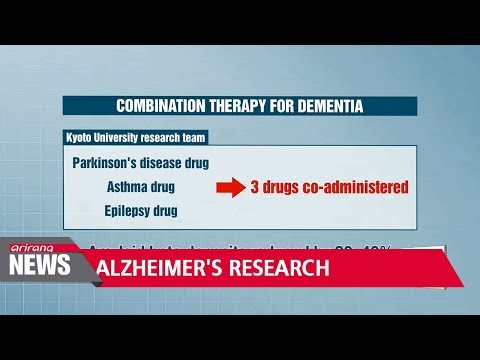
Now, a team of Japanese researchers has found a combination of three existing drugs that

reduces the protein deposits by 30 to 40 percent.

The drug cocktail is the first in the world to reduce levels of the amyloid beta proteins,

but combination therapy has long been regarded as a promising option for cancer treatment.

For instance, Herceptin, used in targeted therapy for breast cancer, was found to be

more effective when prescribed with other anti-cancer drugs.

"Cancer treatment started out with just single drug therapy, which comes with the problem

of tolerance and reduced strength.

Combination therapy can overcome such drawbacks."

Because newly developed drugs tend to come with the dangers of unknown side effects,

researchers are increasingly looking for new ways to use existing drugs that have a track

record for safety.

Park Se-young, Arirang News.

For more infomation >> Scientists find new drug combination that may be key to Alzheimer's treatment - Duration: 1:42.

-------------------------------------------

Researchers Test New Food Allergy Treatment - Duration: 2:05.

Researchers test new food allergy treatment

and new food allergy treatment could allow children to safely consume foods that once would have life threatening researchers at

Johns Hopkins university and duke university are hoping

the scientists are testing whether sublingual therapy

in which tiny amounts of the allergenic substance such as milk are placed under the patients tang could desensitize the body

enough to allow it to move on to oral immunotherapy

in which the patient swallows small amounts of the substance in experiments kids who did

sublingual therapy before oral immunotherapy had better results

CNN .Com reports however that the treatment plan needs to be carefully home to minimize

the chances of triggering serious allergic reactions in children

the results suggested that children who went through a year of sublingual therapy followed by 1 to 2 years of oral immunotherapy who are

less likely to have significant allergic reactions when undergoing the oral immunotherapy

still it did not eliminate all symptoms

this is particularly important because about 20% of the kids that

Dr. Robert wide of Johns Hopkins and colleagues work with have significant reactions

during the treatment that make the therapy unfeasible

wood said some participants have shown they can safely eat milk products are to a year after

stopping the therapies wood said that only one 3rd have long-term protection

others need regular exposure to milk in order to maintain protection against allergic reactions have milk that's not too hard wood says

because one could E pizza a couple of times a week

For more infomation >> Researchers Test New Food Allergy Treatment - Duration: 2:05.

-------------------------------------------

Scientists find new drug combination that may be key to Alzheimer's treatment - Duration: 1:44.

Alzheimer's disease is the most common form of dementia, and currently there's no cure.

But researchers in Korea have found a combination of existing drugs that reduces a substance

believed to cause Alzheimer's.

Park Se-young has more.

The number of Koreans with Alzheimer's is expected to surpass 800-thousand by 2020.

There is so far no known cure or established treatment for the disease.

Research has focused on attacking the buildup of amyloid proteins which form in sufferers'

brains and are believed to play a key role in causing Alzheimer's disease by blocking

nerve cell communication.

Now, a team of Japanese researchers has found a combination of three existing drugs that

reduces the protein deposits by 30 to 40 percent.

The drug cocktail is the first in the world to reduce levels of the amyloid beta proteins,

but combination therapy has long been regarded as a promising option for cancer treatment.

For instance, Herceptin, used in targeted therapy for breast cancer, was found to be

more effective when prescribed with other anti-cancer drugs.

"Cancer treatment started out with just single drug therapy, which comes with the problem

of tolerance and reduced strength.

Combination therapy can overcome such drawbacks."

Because newly developed drugs tend to come with the dangers of unknown side effects,

researchers are increasingly looking for new ways to use existing drugs that have a track

record for safety.

Park Se-young, Arirang News.

Không có nhận xét nào:

Đăng nhận xét