Thứ Tư, 27 tháng 6, 2018

Auto news on Youtube Jun 27 2018

Democrat Employee Betrays Barack, Reveals His Treatment Of 'Undocumented Citizens'.

We've seen a lot of fake outrage on the left over Trump's detainment policies.

All of a sudden, liberals are fuming over the fact that the government separates parents

from children while detaining them.

Democrats claim this is cruel and wrong, but they never think about the irresponsible parents

who endangered their children by entering America illegally.

Over the last week and a half, the fake news has tried to distort the facts, as they do

with every issue.

They have tried to paint President Trump as some kind of monster who is "ripping"

kids from parents' arms.

And yet, they conveniently ignore the fact that these policies have been around for a

long time.

In fact, the Trump administration is trying to improve the situation.

The same certainly can't be said for the previous POTUS, either.

From IJR:

On Sunday, 'Fox News Sunday' host Chris Wallace grilled former Department of Homeland

Security Secretary Jeh Johnson for his role in detaining families and children while former

President Barack Obama was in office.

Wallace explained that he jailed entire families and, in some cases, separated children from

their families.

Pictures were also shown on the screen of unaccompanied minors in jail situations while

Wallace was speaking.

"I freely admit it was controversial.

We believed it was necessary at the time, I still believe it is necessary to remain

a certain capability for families.

We can't have catch and release.

In my three years, we deported or returned over a million people, but again, you can

deal with this on the border, you can try different things, we did not want to go so

far as to separate families…

…but unless we deal with the underlying causes that are motivating the people to come

here in the first place, we are going to continue to bang our heads against the wall on this

issue."

Funny how liberals are allowed to admit these things … but when Trump says the exact same

thing, he is branded a racist, xenophobe, and bigot.

Obama knew there was a crisis at the border, but even then, Democrats and corrupt Republicans

wanted more illegals in America to exploit.

The mess he created was passed on to Trump, who is actually making good progress.

It's amazing to hear Johnson admit we have to confront the real problems at the border.

As he said, "the underlying causes"…

Perhaps people are motivated to come here, because we have a massive, open border?

Maybe if we secured it, they'd realize they can't just waltz across the border any time

they wanted?

Call me crazy, but perhaps a border wall would force Mexico to actually care about its people?

And for our part, unless we get rid of the obstructionist Democrats, this problem will

only get worse.

Mid-terms are coming up; if Democrats win more seats, you can kiss the wall goodbye.

More illegals will flood the border.

But if Republicans score more seats in Congress, Trump's MAGA agenda will have fewer roadblocks.

We can only hope…

what do you think about this?

Please Share this news and Scroll down to comment below and don't forget to subscribe

usa facts today.

For more infomation >> Democrat Employee Betrays Barack, Reveals His Treatment Of 'Undocumented Citizens' - Duration: 3:24.

-------------------------------------------

Democrat Employee Betrays Barack, Reveals His Treatment Of 'Undocumented Citizens' - Duration: 3:04.

For more infomation >> Democrat Employee Betrays Barack, Reveals His Treatment Of 'Undocumented Citizens' - Duration: 3:04.

-------------------------------------------

అల్సర్స్ అంటే ఏమిటి ? ఎన్ని రకాలు ? | What Is Ulcer | Types Of Ulcers | Treatment For Ulcers | Ulcer - Duration: 27:02.

POOJA TV PRESENTS

For more infomation >> అల్సర్స్ అంటే ఏమిటి ? ఎన్ని రకాలు ? | What Is Ulcer | Types Of Ulcers | Treatment For Ulcers | Ulcer - Duration: 27:02.

-------------------------------------------

DCIS breast cancer - treatment and prevention aspects (2) - Duration: 3:38.

Let's start with breast cancer, Ductal Carcinoma In Situ, DCIS.

It is earliest and localized form of breast cancer. Dr. Anton Titov MD

But the decision-making on treatment - how to best treat localized breast cancer - is

quite complex, and in particular, most women with DCIS have local, breast-conserving therapy

and radiation therapy.

A minority of women with DCIS have recurrence despite those interventions, but the vast

majority never recur.

So DCIS treatment might be excessive.

You have done major work in treatment decision-making in DCIS.

What could you tell about your work and the results that you obtained?

It's certainly true that the treatment of DCIS is a major challenge and there's really

nothing that isn't being questioned at the moment.

Some people even are concerned that it may not even be necessary to do any surgery.

My personal view is that the lumpectomy to take out the bulk of the tumor is likely to

be very effective.

And the fact that surgery has improved over the last decade or so, in much greater care

for getting clear [surgical resection] margins had a major impact on the very low local recurrence

rate that we see with DCIS.

One of the bigger challenges is

- who needs radiotherapy?

At the moment there probably are far too many women getting radiotherapy, it's almost a

100% in the United States and over 70% in the United Kingdom.

Probably many of these women don't need radiotherapy.

And it's our challenge to figure out who does.

Our work has focused on endocrine therapy, we've done work both for the invasive cancers

and also in the prevention setting.

We study to which extent tamoxifen or other aromatase inhibitors could actually reduce

recurrence rates in DCIS.

The effects are real, there have been two studies looking at the effects of tamoxifen

in DCIS, one showing a clear benefit in local and contralateral tumors.

In our own study, which was not so positive for local recurrence, it did show an effect

on contralateral tumors.

So I think it's still a bit of an option, but for women that tolerated endocrine therapy

well,

- and that's the majority - it does prevent recurrences, and these women are at very high

risk of new tumors in the opposite breast.

So it's not only recurrence, but it's actually preventive therapy for new breast cancers.

The effects are not so striking as they are with invasive cancer, so for women that do

have side effects or have difficulty tolerating these drugs it's not unreasonable not to take

them.

And they are almost certainly only appropriate for estrogen receptor-positive DCIS, and until

recently, in many places even receptor status in DCIS is not routinely measured.

So there are a range of issues there.

Other issues relate to other markers, like HER2 is positive in about 40% of DCIS.

That may be important as well for determining how much therapy should be given.

For more infomation >> DCIS breast cancer - treatment and prevention aspects (2) - Duration: 3:38.

-------------------------------------------

Tumor markers in DCIS breast cancer: predicting endocrine treatment and radiotherapy (3) - Duration: 2:01.

You are involved in, and you are leading clinical trials that identified the specific markers

in DCIS, Ductal Carcinoma In Situ breast cancer, which may be predictive who might recur and

what kind of treatments may or may not be given.

What can you tell about that research?

I think this is a very important area because we do know that not all DCIS progresses, so

first challenge is to determine, which DCIS has progressive potential and needs additional

treatment, and which cases can be managed simply probably by surgery and maybe *not*

even radiotherapy.

The first things we looked at have really been things that have been important for invasive

breast cancer - that is, estrogen receptor +, progesterone receptor +, HER2 positivity,

and also Ki-67 as a measure of proliferation index.

Those markers are potentially quite useful, but it's still early days, we're in the process

of doing a large study based on our first DCIS trial, which is 1,700 patients, and we

have blocks on over a thousand of them now.

So that work is ongoing, the only work that's been completed has been done for the estrogen

receptor and for HER2 receptor.

And there is evidence that HER2 is important for predicting response to radiotherapy, that's

not published yet, but it's been presented at a meeting.

And we do believe that estrogen receptors are very important for determining who needs

endocrine therapy. Dr. Anton Titov MD

For more infomation >> Tumor markers in DCIS breast cancer: predicting endocrine treatment and radiotherapy (3) - Duration: 2:01.

-------------------------------------------

Neymar, Cristiano Ronaldo and Lionel Messi getting special treatment at World Cup - Pearce - Duration: 1:55.

 Pearce was speaking following Portugal's 1-1 draw with Iran on Monday. Portugal captain and Real Madrid star Cristiano Ronaldo appeared to elbow an opponent

 However, despite the use of VAR, Ronaldo was only given a yellow card. Pearce also believes Brazil star Neymar could have easily got sent off in their win over Costa Rica last Friday

 He does not think the likes of Ronaldo, Neymar and Argentina star Lionel Messi will get sent off unless the referee has no other choice

 "I don't think many of the big stars, no matter what they do – within reason – will get sent off at this World Cup," Pearce told talkSPORT

 "FIFA have sent out a guideline to referees saying they need to protect the big stars, the big players need to play – and I think it's almost given them immunity

 "FIFA want to protect the best players in the tournament from bad tackles and with that protection, I think, they get a bit more tolerance, I really do

 "We covered the Brazil game where Neymar got booked and continued to harangue the referee

 "He could have comfortably got sent off in that game, all the back chatting and the gesturing

 "I think some of the big superstars now have got to do a hell of a lot to get sent off the pitch at this World Cup, because referees have been guided to protect them

"

For more infomation >> Neymar, Cristiano Ronaldo and Lionel Messi getting special treatment at World Cup - Pearce - Duration: 1:55.

-------------------------------------------

Drug treatment center for women closing - Duration: 1:41.

For more infomation >> Drug treatment center for women closing - Duration: 1:41.

-------------------------------------------

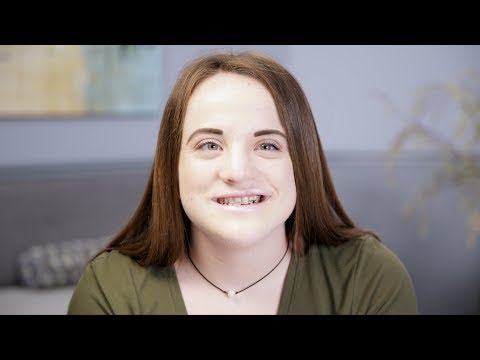
Cleft Lip & Oral Pathology Treatment in Metairie LA: Nicole | Oral Surgery Services - Duration: 0:49.

My name is Nicole, I live in Covington, Louisiana, and I was born with a cleft lip, and I've

had several surgeries done for my cleft lip and cysts.

It all went very, very well.

My recovery was very fast and easy.

The staff is very welcoming them – they're like another family to me because I've been

here for so long.

I know everybody, and it's really comforting.

Dr. Smith is a very good surgeon.

When I'm still in the room waiting, he'll talk to me about what's exactly going to

happen.

He'll always help me out if I have any questions, and especially after surgery a lot, he'll

call and check in to make sure my recovery's going well.

I love coming here.

They help me out a lot with everything with all of my surgeries.

For my friends and family in Covington and in Harvey, I highly recommend Oral Surgery

Services.

For more infomation >> Cleft Lip & Oral Pathology Treatment in Metairie LA: Nicole | Oral Surgery Services - Duration: 0:49.

-------------------------------------------

Malloy introduces opioid treatment program for CT youth - Duration: 0:23.

For more infomation >> Malloy introduces opioid treatment program for CT youth - Duration: 0:23.

-------------------------------------------

Calgary dentist discussing treatment for Cervical Dystonia - Duration: 7:43.

So Averil, as you sit here, we're going show your task-orientated dystonia.

They call it task specific dystonia. We have a pad of paper, we're going to use that to

stimulate and as you start to concentrate, we see that your dystonia

kicks in. As you come back up it's normal. Can you rotate your head

left and right right now? To the left, to the right. Good.

In the dystonia, can you rotate left to right?

Can you bring your head to me? No okay. If stop what I'm doing

then you can turn. Okay we've got a little bit red nose because we've had

just a thing. A little breakthrough. So just show me writing again on the paper

and how much pull did you feel? Just hardly. Hardly any pull. Before, it felt like my head was going to twist off. It's amazing. You saved my career.

I am very happy. This is exactly what we try to do so I am very very happy. What was it

your neurologist said? He said that basically I had cervical dystonia, there

was no cure for it and just had Botox injections to paralyze the muscle every

three months for the rest of my life and any any kind of therapy I would

have would be just a sensory trick that would be temporary. A sensory trick.

Well I guess we did a sensory trick, we're Penn & Teller. Okay thank you very

much. We'll get more later okay. Hi so I'm here with my patient Averil and we have gone

through initial treatments balancing the bites head and neck assessment, therapy

for the head and neck assessment of the hips and back therapy, for the hips and

back. Today what we just did is we inserted your orthotic so you've got an orthotic

in. So let's show off our orthotics. Gross anybody that doesn't do dentistry.

But for dentists, this is just normal.

Okay so tell us where you came from and where you're at. So I started out with

extreme pain in my neck shoulders and back probably for the past three years

it had gotten to the point where my muscles were pulling a lot my head was

rotating to the right especially when my head was down doing anything specific

such as working so that's called task-specific, so after being evaluated

it was that my jaw, well my bite, was off. My jaw

was in the wrong position, my cervical vertebrae was out of alignment and my

hips were out of alignment. They were not only not level but they were also

rotated and they all played a part in my problem and so now that we've identified

the problem and started treating the problem, first with a bite adjustment and

manipulation and cervical manipulation, I noticed a huge improvement immediately

for the first time in three years my head doesn't rotate when I have my head

down or when I do something specific like writing my own name. I no longer have that turning. My pain is pretty

much non-existent I haven't had a headache since he did the first

adjustment which was... So this is Monday and it was last Wednesday. Wednesday yes.

So you haven't had a headache for five days. Right and prior to that I had had a

headache for the past year every single day.

So basically what we've done is we've looked at the way that Averell bites.

We've looked at the way that her head and neck alignment winds up and we've

looked at how her backs and hips line up and whether there's a twist or a tip or a

rotation. I'm just a dentist, I just do the the bite stuff.

We have an upper cervical chiropractor that works on the neck we have a

biomechanical therapist that gives you stretches of massages to work on the

hips and assess the hips. Everybody measures before and after pre

and post measurements. We all have ways of measuring things and the end result

is decreased muscle strain. The orthotic is to help the compress TMJ and bring

that jaw forward and that's what imbalance the had neck balance and the

hip. If you were to talk to somebody not as a dentist but a patient... I was

what number - what was my doctor number? 20. So there's a lot of frustration out

there and there are people out there. I mean obviously I'm not the only

person that does this but there's people out there that look at this and "help!" and

so what would you say to people that have you've been through? They're on

doctor number 19 and well ready to give up. I would say don't give up, you have to

find the right doctor that is gonna look at you in a comprehensive way not just

this area or this area or your hip area but look at the whole body and treat the

whole body because you could fix this and get soso results or temporary

results but if unless you're treating the whole body you're not going to get

to where you need to be and you really have to look .

So thank you very much and thank you very much Averil this has been fun. it's

been great working on a fellow dentist. Have a great day.

For more infomation >> Calgary dentist discussing treatment for Cervical Dystonia - Duration: 7:43.

-------------------------------------------

Prostate cancer, localized - how to weigh treatment risks vs. benefits? (5) - Duration: 2:10.

Let's discuss prostate cancer treatment. Dr. Anton Titov MD

Clinically localized prostate cancer presents a diagnostic and management challenge: whether

to go for the whole gland therapy and aggressive form of therapy or to follow people.

And what to monitor?

You have led several clinical trials in a localized form of prostate cancer.

What are they showing on the treatment of the localized prostate cancer?

I think prostate cancer is an even bigger challenge that early breast cancer is, because

although over-treatment is sometimes unnecessary in breast cancer, it usually does not carry

the kind of morbidity the treatment for prostate cancer does.

A radical prostatectomy is usually associated with incontinence, which can last for up to

a year, and impotence, and a range of issues.

So the decision to do a radical treatment is more difficult, I think, for prostate cancer

because the side effects and morbidity are greater.

It's also clear that screening for prostate cancer, which is very common in the United

States, does lead to the detection of many early lesions, and there's a move even to

call some of these early lesions "pre-cancer", although they really are formally "cancer",

histologically they satisfy all the requirements of cancer, in the sense that they're invasive

and broken through basement membrane.

But many of them will not progress actively, and again the challenge is, can we from just

something as simple as a needle biopsy begin to say, which patients can be safely watched

and which ones have high enough risk to need radical treatment immediately.

For more infomation >> Prostate cancer, localized - how to weigh treatment risks vs. benefits? (5) - Duration: 2:10.

-------------------------------------------

How does the timing of chemotherapy, radiation and surgery affect treatment for breast cancer? - Duration: 2:28.

The timing of what you need when is kind of an evolution.

So more and more we're actually using what's called neoadjuvant chemotherapy, meaning chemotherapy

before surgery and radiation.

That is needed especially when you have a very aggressive tumor.

So typically what we call the triple negative breast cancers or the HER2-positive breast

cancers.

I tend to recommend chemotherapy before surgery for a couple of reasons.

Number one, it can shrink the tumor and make a tumor that wasn't a very good candidate

for breast conservation therapy now one that's very good for breast conservation therapy.

It can actually turn positive lymph nodes negative, or what I call downstaging the excela,

so you may not need as aggressive surgery into the lymph nodes as what you would have

needed before.

It can also, and my favorite thing, is actually show us whether or not the chemotherapy worked.

The typical course of therapy, which would be adjuvant therapy, we've already removed

the primary tumor in the breast and you just kind of hope the chemotherapy worked.

With neoadjuvant chemotherapy we can actually know if the chemotherapy worked or not.

And then maybe if it didn't work as well as we hoped, you can actually be a candidate

for other therapies that wouldn't be able to be given to you if you hadn't had the chemotherapy

first, or we wouldn't have known you

needed them.

For more infomation >> How does the timing of chemotherapy, radiation and surgery affect treatment for breast cancer? - Duration: 2:28.

-------------------------------------------

World Cup 2018: Maradona receives treatment after Argentina's dramatic win - Duration: 1:10.

World Cup 2018: Maradona receives treatment after Argentina's dramatic win

The Argentina great, 57, threatened to steal the show during the Group D clash in St Petersburg, where an 86th-minute goal from Marcos Rojo sent Jorge Sampaoli's men into the knockout stage.

But Maradona was pictured receiving treatment from paramedics at the stadium after the game, having earlier needed assistance on the way from his seat.

The 1986 FIFA World Cup winner went through a rollercoaster of emotions during the encounter, beginning with dancing with a Nigeria fan pre-game.

After exuberantly celebrating Lionel Messi's classy opener, Maradona was seen sleeping.

He had a final – and rude – celebration after Rojo's winner, offering middle-finger salutes to fans as Argentina booked a last-16 meeting with France.

For more infomation >> World Cup 2018: Maradona receives treatment after Argentina's dramatic win - Duration: 1:10.

-------------------------------------------

Leah Bracknell gives cancer treatment update and NHS praise: 'I will survive!' - Duration: 6:29.

 Former Emmerdale actress Leah Bracknell has shared a moving and uplifting post relating to her medical treatment for cancer in which she praises the NHS

The star, best known for her role as Zoe Tate, was diagnosed with stage 4 lung cancer in 2016 after it was initially missed by doctors and at the time, it was believed to be terminal

 But from the outset, Leah has vowed to fight and survive the illness and has regularly shared her preference for alternative therapies

She regularly updates an honest blog account called Something Beginning With C with her journey and her most recent post appeared to describe treatment for pleural effusion – where a wide needle or cannula is inserted into the chest cavity to drain fluid from the lungs

 She wrote: 'Perhaps if had been born in another time, another country, another town, in another family, with another name and the planets had aligned in the heavens in a different configuration, then maybe none if this would have happened

   'Perhaps in the thread of time, one decision made differently, a glance in an alternate direction, a no instead of yes

A hello and not good bye. And  perhaps wouldn't now be perching on the side of the bed, and not for the first time this month, head resting on a pile of pillows, with a needle and catheter inserted into my back between my 3rd and  4th ribs draining what will be a litre of fluid from the pleural lining of my lung

'  Despite the pain of the situation – which has left her with a 'sea of sickness' – Leah used the post to praise the bedside manner of the doctor treating her

 She continued: 'Beside me, Dr H. wraps things up with a manner at once professional, friendly and endlessly reassuring

We have met several times over the last year, despite my best intentions not to, and he maintains an easy dialogue throughout the procedures that both distracts and normalises this most un-normal of circumstances

As bedside manners go, he rates a 10/10. As think it, hear the words fly clean out of my mouth and into his ears

   'His accent places him in the region of the Philippines. Like so many of his NHS colleagues have had the good fortune to meet, who come from South East Asia, Thailand,  Africa, the West ndies,  eastern Europe,  Spain, Greece, ndia,  China, Hong Kong,  am grateful he made the journey to work here, healing the sick of Great Britain

 'Clearly we cannot sustain this great and wonderful institution alone. Our global friends are a intrinsic to its health

And for all our sakes the NHS, needs saving, before the disease of neglect and lack of funding and secretive selling off kills it off once and for all

Where would we be, where would  be without it? Not here and now, that's for sure

'  Later on in the post, she added: '"No offense,"  say, "but hope we don't meet again for  very long time,"  'He smiles, as have said this very sentence on several occasions over the last year

What really mean, is thank you thank you thank you. Thank you for making me feel so much better

Thank you for the gift of modern technology, science  and medicine that found its way from you to me and means am not drowning in my own water, but alive and kicking

Thank you all from the bottom of my heart. He departs taking my gratitude with him, radiating 10 out of 10

'  And while Leah battles on, she continues to radiate hope and positivity as she signed off with a vow

 'A new song starts up on the radio, Eric sings along, "At first was afraid was petrified,   'HEY! Wait for me Gloria, 'm just putting my skates on, You sing it girl, you sing it loud

And she does , " will survive! Hey Heeeeey!"  'And with that pirouette into the corridor and back into my life

'  You can read Leah's full account of her journey on her blog by following this link


For more infomation >> Leah Bracknell gives cancer treatment update and NHS praise: 'I will survive!' - Duration: 6:29.

-------------------------------------------

HealthWatch: Autism Treatment; Kids Less Impulsive Than Decades Ago - Duration: 2:23.

For more infomation >> HealthWatch: Autism Treatment; Kids Less Impulsive Than Decades Ago - Duration: 2:23.

-------------------------------------------

Early breast cancer, DCIS: how to decide on the best treatment (4) - Duration: 2:40.

If a woman has a new breast cancer diagnosis, potentially DCIS, and is really looking for

therapy, and making care decisions that are optimal and in accordance with the latest

clinical trials. Dr. Anton Titov MD

What she should discuss with her oncologist?

What potential tests or molecular tests on the tumor could be done to really narrow decision-making

in DCIS?

It's fair to say that none of the molecular markers are well enough established to be

used clinically with the exception of estrogen receptor and progesterone receptor.

Those are important for deciding whether to consider endocrine therapy, either tamoxifen

or aromatase inhibitors.

The use of HER2, I think, is still quite interesting, it looks like there will be important decisions

to be made on that, but I don't think we're in position to recommend HER2 testing routinely

at this stage.

There is a whole range of other markers, which we think are important for giving us insights

not only into how to treat DCIS, but what is a pathogenesis of breast cancer?

Which DCIS [Ductal Carcinoma In Situ] is actually on a pathway that's going to lead to nasty

cancer and which ones aren't.

So, in a sense, a large proportion of women with DCIS are being over-treated now, in hope

that one of them is in the subset that will really progress to invasive ductal carcinoma,

but at the same time it exposes people to unnecessary side effects of radiation therapy

and maybe even unnecessary extensive surgery?

Absolutely right, there is no doubt that we're treating more DCIS than we need to.

The challenge is to slowly move back on treatment without endangering the safety of any patient.

I think that radiotherapy is the area where there's the biggest opportunity to actually

reduce treatment, because it's given to almost everyone, and whether or not it's really needed

for small, particularly low-grade tumors is a very open question.

So DCIS in breast cancer is actually one of those areas where P4 medicine can really make

a lot of inroads, and help a lot of people.

Of course, you are absolutely right.

For more infomation >> Early breast cancer, DCIS: how to decide on the best treatment (4) - Duration: 2:40.

-------------------------------------------

17 Multiple sclerosis Treatment of incurable diseases ※ With subtitles - Duration: 5:16.

There is a great reason for Professor Kojima to feel empathy for the treatment method

of the Life Systems Study Group

My eldest daughter contracted an illness called multiple sclerosis

It is an incurable disease in which nerve cells are being damaged

And gradually she lost her body movements

When she was hospitalized, she could only move her left hand

The treatment for multiple sclerosis consists of the administration of large doses of steroids

However, this does not guarantee the

And steroids have side effects

There was a time when the girl had difficulty even talking

Nutrition was by liquid diet

She also lost control of eliminations

Professor Kojima chose not to take steroid treatment

and decided to treat the cause

The treatment began with the adjustment of the sacral bone

Stand up a little

After treatment there was a noticeable change

Before she could not even turn around

but now she was able to lift the upper body

Now you can move here

Before, could she move?

Now the right leg

Could you move this leg?

She could only move a little

And now you can move

Do it with your hand

And then?

It's better?

So? Was there any change?

What is better?

The tingling got weaker

Tingling in what place?

It became easier to move

And the elbow?

The elbow also

And the hip?

I can move easily

Well then we are on the right track

On that day Professor Ito adjusted only the sacred bone

So we went home.

And from that night she can move her leg

I was amazed ...

Wow ... There's something like this ...

I do not even know what to say

The teacher made only the adjustment

And the next day she could just lift her body

And when I saw I was amazed

I did not know there was such a thing

Then treatment continued

In January 2010 she started to stand alone

"You're up." - Yes

You're standing ...

In March 2011 she had improved enough to go back to school

(There is difficulty in moving the right arm backwards)

Usually the arm goes a little bit longer

But when it gets worse, it can not

Professor Kojima continues to adjust the base of support

Today she can move her arm well

(Has numbness on the right foot)

Unlike when she contracted the disease, today she returned to smile

I feel much better after treatment

I can move more easily

Professor Kojima, who witnessed the results of the treatment in his daughter

Today supports the dissemination of the

For more infomation >> 17 Multiple sclerosis Treatment of incurable diseases ※ With subtitles - Duration: 5:16.

-------------------------------------------

Virtue Restorative Treatment Mask - Duration: 4:04.

For more infomation >> Virtue Restorative Treatment Mask - Duration: 4:04.

-------------------------------------------

134A The motive was actually the dental treatment Indefinite complaint and pain that does not improv - Duration: 12:38.

And one more thing

Now it's September 2012

Today is day 29

From now on, remember

This year's summer

and spring, winter and the beginning of the year

This year

And the winter of last year

It's summer last year.

and in the spring of last year had the great earthquake

And the year before and the year before

Three years ago you went to the dentist, did not you?

Yes

In what month?

It was March 2009

It was three and a half years ago.

Yes

Remember this moment

Are you on the first day of 2009?

It is?

So watch

Keep your head as it is

I'm going to pull my arm.

You do not have to touch anything that your arm is normal

And the neck?

Look forward

Here it is fuller than ever

And the scalp?

Is it moving?

I think it is

It's moving.

Now bite the right side hard

It's January 2009 now.

And then?

Not so much...

No. It's now January 2009.

He said not so much. He said not so much.

When he said "not so much" he had already gone back now

When the person encounters his or her symptoms the person returns immediately

So that's why it's to strive and imagine that it's January 2009

I mean, three years ago, you went to the dentist.

I want your mind to come back to the first day in 2009

Came back?

If you came back or not just check to know

He did not come back.

It's difficult...

It's at the time you went to the dentist.

It's before you go ...

The time you went to the dentist three years ago

and it was in March

Come back to the first day of January 2009

Three years ago...

All right?

So now...

In the state in which it is

In the state that was in January three years ago, now bite the right side

How was it?

I can bite hard

Can not you?

He can.

He can bite because it is before he has symptoms

But if he comes back now he can not bite

Things like this happen

That's why I know when it started.

What month of three years ago?

It started in January

It started two months before going to the dentist.

But before that there was nothing

Then there was the reason

And that's why he went to the dentist.

And when he had it, if he went to a salon ...

If I had gone to the hairstylist ...

Now it would be saying that it was because of the hairdresser

It was by tail of the beauty salon

If I went to the lavatory, it would be the

If I had eaten a loaf of bread, it would be the bread

That's it

But it was the dentist who was unlucky.

And today a dentist from Nagoya came to defend his colleagues

He just came to meet you.

If you are in so much trouble maybe he can help

That's why he came today

But for this dentist

Me now...

how to say...

Not support

I'm doing the defense.

It's Not That The Dentist Did Something Wrong

It was already happening before going to the dentist.

And this happened

certainly makes it round

And that's not all

Also made the shoulder move

And it was not only that

The hip also

Lay down

Note

Stay relaxed

The hip displaces

And the left ...

Do not move.

And the right ...

What do you think?

It is true

Shifting, is not it?

Mainly on the shoulder

You feel, do not you?

And the pulse

Here it gets loud

"You see, do not you?" - Yes

You see, do not you?

It's making noise, is not it?

Now the ankle

The ankle is also making noise

"You see, do not you?" - Yes

See how it is

It will end up twisting the ankle

Pull

Yes, it makes noise

You see, do not you?

Touch his head

And if you touch your head ...

It makes noise?

Do not do

You do not, do not you?

It does not, but if you let go of your hand ...

It starts to make noise

There are several places

From the ankle to the hip, and the pelvis also

It's all like this

And this occurred two months before going to the dentist

And what is this?

It's a cerebral infarct.

It is a cerebrovascular dysfunction of a cerebral infarct

If he goes to the hospital, perhaps there are still no signs of a cerebral infarction

But the body is one step away from having a cerebral infarction

If left, cerebral infarction occurs

It is not because of this that a cerebral infarction will certainly occur

But because of this, the body has several problems

And if you leave this, cerebral infarction occurs

But before that

That is, the various symptoms

that is to say, the pains that it feels in the quotidian

and then one of the pains is in occlusion

And that's why he went to the dentist.

And right now, the knee is strange.

Then go to chiropractic or orthopedic clinic

And then it does a lot of things and another problem arises

Several

So even if you go into chiropractic to do massage because you feel pain in the shoulder ...

The pain will not heal

The left side can heal, but the right side will not heal

And this will continue forever.

This is how it is done.

This will not be cured.

And that way 40 or 50 years pass

So this ends up causing dementia

In addition, it will also cause several other diseases

This is the origin

I spoke before ...

There are not many reasons for the various diseases and symptoms

This is the beginning

If you leave this, there will be a cerebral infarction

Some will have cardiac arrest

or vascular dysfunction in the kidneys

This exists

This is not technical language of medicine

These are words I have created

So there are these things

So you can go to any dentist that this will not heal

get up

Here it is concave

Release your hands a little

It is concave in the same way as here.

Here, look, it's concave

It's the same here ...

It is concave and if you tighten you touch the bone

It's that bone.

Here it is concave, and here it is not?

Then this...

It's so it's here

And so

And if you're going to see this one, it's a little bit forward instead of straight

So it's here.

It is like this

- I already wrote, but can I write? - No problem

It's the inner ankle, so it's here.

It's here then.

Hold these two parts firmly

Only with your hands fall to the right, 5 degrees forward

Now do it with the whole body.

Okay, that's all.

That's the way you do it yourself

Get up and be straight

Touch the face and see how the musculature is on both sides

I feel it is still fuller on the left side

Having stayed too long, the muscles went weak

Then there are cases where it does not return immediately

So let's see how the shoulder got

How's the shoulder?

I still feel like you're moving just a little, but ...

I'll do it one more time

It is like this

Now feel the right side of the neck with your left hand

With the left hand

What about the muscles?

Before it was as if the skin were under tension

But it's not like that now ...

Now the scalp

It's not for the sides, it's behind

Hold thumb flat and try to move the skin

First the left side

Move is not it?

Now the Right

You had better do it before ...

Does the right side move?

Yes

Move is not it?

The scalp, the neck too, and the arm too, now lie down.

If he did not touch his head, his arm would not stop.

And now...

Even without touching his head

Does not move

get up

Bite the right side hard

And then?

I can bite hard

Can not you?

And now you're thinking about what you ended up saying to the dentist ...

And you're thinking about when you barely spoke to the dentist ...

And now you feel ashamed, do not you?

The dentist had nothing to do with the problem

It was you who was in this state of health.

If you had gone to the hairdresser, you know what the hairdresser would have to hear, would not he?

What do you think?

That's the reason

You were with something that could have caused a cerebral infarction

And what was it?

The feet were displaced

And this is going up

And this is getting worse and over time you end up having a cerebral infarction

There are people where this occurs quickly

And there are those that take decades to happen

And there are those who end up healing

And so it's important that you yourself learn how to check

And while you do nothing, it may be that it causes another disease

So you go to the hospital and no one knows what it is, but even so you recipe the remedies

But almost always the source of the problem is this

It can be any disease, almost always the origin is here

It is

And as we did now, when you have a problem, try playing the head

Touch your head on the right and left touch various places

There are places to be touched

The right of the head, or the left

The heart, or lung, left or right

Or the kidneys

the liver

There are several places to play

And if you touch any of these places and realize that you've improved a bit ...

That is the source of the problem

So in this case, touching the head improved

So the right side of the head was in trouble

And this was a cerebrovascular dysfunction on the right side

But why?

So now we try to tilt the body

So without even touching the head, it improved when leaning the body

It means that if you lean the body towards this direction the body improves

And that means that the body was shifted to the opposite side

This is what we discovered

Then the shaft was displaced

So if you even adjust your axis, the problems all disappear

And to know when it started, just go back your time

1, 2, 3, 5 years, it comes back and suddenly the problem disappears

So if you find out when you started, you'll dig deeper

And it was three years ago, three years, two months and three days

It was at 6:00 p.m.

All this the brain knows

That's why I know when it happened.

Because his brain knows

That's why I know everything.

That's how it works

Any questions?

Không có nhận xét nào:

Đăng nhận xét