Thứ Tư, 27 tháng 6, 2018

Auto news on Youtube Jun 27 2018

Hey Guys! This is Raghav here

from Headphone Zone.

Today we are talking about the

V-Moda Crossfade 2 Wireless headphones.

Now for those of you who aren't very familiar

V-Moda is a brand that all of us

here at Headphone Zone has loved

over the years.

Mostly because of its really techie fashion-forward design

and for the fact that they've been making

some outstanding sounding headphones

that were really made for both DJs

and audiophiles alike.

V-Moda has designed all its headphones

from its Milan design center

and they're now engineered with some cutting-edge

Japanese technology.

I'd say V-Moda is the kind of headphone

you wanna be seen wearing when you're stepping

out of your Lamborghini wearing an Armani suit.

Its the culmination of decades worth of

design and engineering and which is why

its worthy to be called a 'Flagship'.

The Crossfade 2 Wireless is clearly built like a tank

Is been rated at military levels of durability

and you can drop it from a height of 10 feet

and the chances are that you'd probably need a new floor.

You will find that the Crossfade 2 Wireless features

a Steelflex headband

you can flatten it, virtually without any chance of the

headphone being spoilt, loosing shape or even breaking.

The headband itself features Vegan leather

so they're quite durable and tend not to have

any kind of damage on it what so ever.

The headphones can survive extreme environments

like lots of humidity, extreme temperatures,

and even saltwater sprays.

Perhaps the most impressive part

of the Crossfade 2 wireless

is your ability to get a custom artwork

engraved on to the shields of these headphones

its absolutely amazing that they can be

personalised to this level.

Comfort has been the topmost

priority, because the people who are gonna be

using these headphones aren't just musicians

and DJs, there are also people who are businessmen,

executives and musicians wearing them

for hours on end.

I like the fact that the headphones

feature memory cushions for the ear pads

and they really hug the contours of your ears.

V-Moda has designed these headphones

to be used equally well, both on

wired and wireless mode

Djs and professional musicians are more likely

to use it on the wired mode

take advantage of its zero latency

but at the same time while you are on the move

they sound equally good on wireless.

The headphones feature 14 hours of battery life

which is amazing and it has

10 meters of range, so they can be used quite conveniently

in a gym.

You'll find that it can pair simultaneously with 2 devices

which I think is a real great feature to have.

The Rose Gold variant also features Qualcomm's aptX technology

which means that when you've paired it on

wireless mode, The music is transmitted

at nearly CD quality

which means you get a real lossless experience.

The built-in microphone on the device is also

compatible with all the voice assistance out there

so by a simple flick of a switch,

you can command Siri, Alexa, Cortana, Ok Google

and all the other voice assistance out there

Ok, unlike a lot of the other headphones in this price point

the V-Moda Crossfade 2 Wireless

don't feature Active Noise Cancellation

but they do an outstanding job

especially with the memory foam cushions

of cutting out all the ambient sound like

Aircraft engine noise, the shouting of people around you

or the sound of crying babies.

I'll probably stick my neck out and say that the

Crossfade 2 Wireless is the most portable of all

the headphones in this category.

It features V-Moda's click-fold hinges

which allows you to fold these headphones

into super compact palm-sized form factor

and it fits into an exoskeleton carrying case

that's really super compact making it easy to carry with you

everywhere.

Now V-Moda has over the years been known for making

a sound signature that makes you feel

like you're at a nightclub

rather than that of a concert hall

or clean sanitized music studio

Its always been over the top, aggressive

unapologetic and loud with its bass.

But, the Crossfade 2 Wireless is anything

but that, it's the most precise and audiophile friendly headphone

to come out of V-Moda's table in a long time.

I'd say its also really versatile,

so even if you're a person who doesn't enjoy EDM,

house or hip-hop then these are headphones

that can certainly sound very very good

no matter what you use it with.

I'd say this is certainly not clinical

and precise like an open back audiophile

headphone, but the Crossfade 2 Wireless is certainly

very musical and enjoyable and fun to

listen to, which is I think the point of it.

Technically, the headphones are really

top notch, they feature 15mm driver unit

that has a dual diaphragm design from Japan.

So the bass is really not bleeding into the mids and highs

and they have real nice clean sound.

They've been even certified as a High-Res headphone

by the Japanese audio society.

Don't forget the Rose Gold color comes with aptX

which means that the sound quality is absolutely

lossless when you're using it on wireless mode.

Ok! Now lets wrap this up.

For less than ₹30,000 the V-Moda Crossfade 2 Wireless

doesn't shine on any one aspect

but I find that these are the most versatile headphone

and it really comes as a complete package

covering all basis.

I don't think that there's really any other headphone

in this category that leaves me as impressed

as the Crossfade 2 Wireless.

They look beautiful, sound amazing, portable, easy to use

and its some headphone that really takes your breath away

once you put them on.

Now, I hope that this video has been helpful

but you have any other questions

just feel free to drop it in

the comment section below

and we'll be sure to get back to you.

Thank you so much guys

this is Raghav signing off.

For more infomation >> V-MODA Crossfade 2 Wireless: In-Depth Review & Buying Guide - Duration: 6:00.

-------------------------------------------

The Joanna Gaines Guide to Living Your Best Life - Duration: 3:00.

For more infomation >> The Joanna Gaines Guide to Living Your Best Life - Duration: 3:00.

-------------------------------------------

Bowers & Wilkins - PX: In-Depth Review & Buying Guide - Duration: 3:50.

Hi Guys! This is Raghav here from

Headphone Zone

Today we thought we'd do a video

about the Bowers & Wilkins PX.

The Bowers & Wilkins brand is really famous

around the world, and they are known for making

some of the best speakers of all time.

The P series of headphones is

Bowers & Wilkins attempt to apply that

speaker technology to a really nice

series of headphones,

and has been critically acclaimed

and popular over the years

and though they are a little late in the game,

the PX is really a flagship headphone

from the entire lineup

and is worthy of that title.

We thought we'd do a video

talking to you a little bit about

what makes the PX unique and different from

all the other headphones which

are in this crowded segment.

I wanna first talk about the design of the

Bowers & Wilkins PX

they come in two color variations

a soft gold and navy blue,

as well as space grey, and they both look fabulous

and luxurious.

I would say they've used some super premium material

while designing these headphones

and there's a soft leather that they've used for the earpads

and they've used a very natural aluminium frame

which bends into an enclosure that's made

entirely out of ballistic nylon, its super fancy to look at

They've also made the earpads elliptical in shape,

so it adds to the ergonomics of wearing these headphones

for a long period of time

The headphones also fold flat entirely,

so it becomes very convenient to carry these headphones

around if you want to put it inside your bag

The Bowers & Wilkins PX is first and foremost

a wireless headphone, it connects with all your personal

audio devices over Bluetooth, allowing you to

stream music on the go.

I would say with 22 hours of battery life

Its amongst the longest you'll find from any headphone in this category

In the aircraft, the focus is on eliminating

the sound of the aircraft engine, while you're roaming

around in the city, the traffic is what needs to be eliminated.

The accompanying app of the headphone allows

you to control that.

One of the coolest features is if you take the

Bowers & Wilkins PX off your ears, it automatically

pauses the music that you're listening to

and putting them back on resumes the music

from where it left off, I think that's really cool.

The Bowers & Wilkins PX is certainly a very

musical headphone.

What that means is they're not the most

accurate or the most transparent of headphones

but they've got a lot of added warmth and bass

so you'll find that these headphones are

fun to listen to

most audiophiles may frown upon them

but that's not who they are trying to impress.

If you're gonna wear these headphones

while you're on the move,

in the outdoors

then I think that extra kick that they've added

into the bass is really the highlight of the headphone.

I think what Bowers & Wilkins has gone for

is to give you an immersive sound,

and they've done this by angling the drivers a little bit.

By angling the speakers, the sound doesn't enter

your ear directly,

but instead gives you the perception that the sound

is coming from an arm's length distance

Now when you use aptX HD, and you use it with

a nice High-Resolution audio file playing from a good player

you'll find that the musical experience is unparalleled

and that probably makes the Bowers & Wilkins PX in my opinion

the best sounding Noise Cancellation headphone in this category.

I don't really think of the Bowers & Wilkins PX

as a smart headphone, it doesn't really come with a

long list of features

but that's not what the PX is about

I think its really about a timeless design

and a fantastic sounding headphone

which is a real testament to the legacy

that Bowers & Wilkins has built for itself

over the years.

I hope that this video has been helpful

and if you have any more questions about the

Bowers & Wilkins PX, you should feel free

to write them in the comment section below

and we'll be sure to get back to you.

Thank you so much

This is Raghav signing off.

For more infomation >> Bowers & Wilkins - PX: In-Depth Review & Buying Guide - Duration: 3:50.

-------------------------------------------

Valencia, Spain Travel Guide: Top things to do and see in Valencia! - Duration: 10:01.

Good morning everybody, today we are in Spain, in Valencia, and we are over a huge river,

Turia river, that was cut from this part of the city and moved to another part.

We have Fernando here with me.

And they had to move this river because it was overflowing everytime and right now here

they made a 10 km park which is really really amazing!

So guys, this was the main entrance to the city a very long time ago.

"La puerta de Serranos".

So these were the original doors.

Pretty huge.

Welcome to placa de la Virgin, it means "Square of the Virgin", it has one of the most beautiful

structures here in Spain and also has a very interesting story regarding a pilgrim that

came here, asked for hospitality and then the day after instead of finding him, they

found the statue of the virgin.

Fernando just offered me a little tower view.

Ah, you are fiming now.

Yeah, yeah, all the time.

You b*stard.

You are filming my butt.

Oh, for the viewers and for your girlfriend.

Believe me, this is not my best part.

Guys, it's never ending, really.

Wow.

There are only 240 steps.

Maybe I will cut to the top.

That's a pretty nice roof.

Guys, it's harder than expected, actually.

I will eat 1 kg of paella later.

Here we are.

Finally.

Ok, we have 10 kg less now.

Over there is the city of Art and Science.

So guys, later we are gonna go to the city of Art and Science.

Maybe tomorrow.

Who knows.

Fernando told me that they are totally gonna change this square behind me, so appreciate

it for a second.

We are still alive after the tower and here there is another one.

Are you ok?

Yeah.

So guys, that's where the president of the city lives.

And my hairs are always a mess.

Ehm, I'm sorry, I just "That's where he lives" but actually he works there.

Behind me you see the central station and on the other side there is this mini Colosseum

where the bulls fight.

Actually the word "fight" isn't the right terminology.

But let's say they do some shows.

I just want to adress that I've been taking two coffees in the last half a hour.

I don't know if you can see it from my eyes, probably you do.

I've spending the last 20 minutes trying to make a cool timelapse of this fountain and

I hope Fernando is not too bored...

No, I'm not bored, so...

We just bought everything in a Argentinian shop that Fernando suggested, and now we are

gonna eat all these beautiful food.

If you are in Europe, eat street food.

It's amazing!

Stop talking, I'm hungry :)

Empanada di carne.

Empanada de queso.

Is like...

York and cheese.

And here we have the last thing, calzone di rockefort.

It's pretty huge so we are gonna split it.

It's bigger than my face!

This one is a pretty interesting murales or graffiti or sometihng else.

As you can see there are snakes and there is a face, so this is a beard.

And this guy is Mosè.

Mosè with the...

Moses, of Fernando, Moses, with the two tables of laws and as you can see the laws are euros

and dollars.

Also on the other side.

So this thing it's pretty meaningful.

Here we have another interesting murales/graffiti and check out this: "In the country of the

blinds, the one eyed man is the king".

All this holes you see they were made during the civil war.

The were shooting at this place.

Now we are again under this very long bridge, and I mean this very long river.

I really do hope that you can understand how large it was this river.

Fernando is telling me that there are 100 types of trees on this river.

Here is where you can run, here is where you can pass by bike and on the other side is

where you can pass by walking.

I wish that everycountry that moves a river will transform is old river in something like this.

Because it's really amazing and kids they have a place where to play, adults they have

a place where to do sports and it feels just right to walk in a park.

We are in front of a very interesting tree.

Check it out.

From here everything is normal.

But when you go up...

I think that someone is cleaning up down here so that kids will not be hurt.

In the middle of the river they built a huge Gulliver where kids can play.

I wish I was a kid almost, or maybe I could go by night as an adult.

Who knows.

From here it's starting la Ciutat de les Arts i les Ciències.

This building looks like it came from space.

And all this we are seeing it's still on the river.

Here comes the other building.

Really, guys these architects were inspired by aliens or they are aliens.

One of those is Calatrava, Santiago, from Spain.

And I think it's crazy, but also beautiful what he makes becausw he's trying to make buildings

that they look like bones of animals.

So yeah, for sure he is crazy, but we appreciate the art.

Fernando just bought me an orxata.

Probably at the start I will not like it.

But maybe I'll get used to it.

Let's try.

It's very good, I like it very much.

It's very strange.

At the beginning it's strange, but a optimal drink.

Yeah, I hope it's healthy too.

They call this thing The Eye.

But it kinda reminds of a beaver.

Look at the entrance, it's pretty cool: you can slide this door down.

Inside The Eye they show some special 3D movies.

Here you have some possibilities.

At night over here they make a disco, but just in summer.

Which... we are in May.

So could be the right time...

Or we are in June...

It's June or May right now?

Oooh, Ferndando is gonna be arrested!

Seems like a perfect place to make a dump.

In Anciet Rome you had similar toilets: all together you were taking your dump.

C'mon, it's not a toilet!

Ok, finally we are back at the house for some little rest, then if we are in time we are

gonna try to catch the sunset, maybe with the drone so if you are gonna see some drone

shots they will be at the end the video.

Maybe tomorrow I'll try to shoot a documentary in Spanish.

Maybe even two documentaries.

One in English and one in Spanish.

And for the rest I think that's it for today, thank you for watching, keep reading and

believe in your dreams! Ciao!

For more infomation >> Valencia, Spain Travel Guide: Top things to do and see in Valencia! - Duration: 10:01.

-------------------------------------------

Michael Hing's Guide to Dealing with World Cup-Exit Anxiety - Duration: 2:08.

For more infomation >> Michael Hing's Guide to Dealing with World Cup-Exit Anxiety - Duration: 2:08.

-------------------------------------------

Beginners Guide to Solidity Development 1 - Introduction to Ethereum, Smart Contracts and Solidity - Duration: 8:10.

The token or explains a beginner's guide to developing smart contracts using the solidity programming language on top of the ethereum blockchain platform

In this first episode, I will introduce aetherium and the concepts smart contracts and solidity to you

First some background info about this guide

this guide will be a practical guide to quickly develop your own smart contracts as such we will not go into a lot of

theoretical background about the etherium

There's a lot of interesting stuff there and we highly recommend that you check it out within this guide

You will only give you some overview information

Just enough to easily get you started and understanding how you can interact with it

It really helps if you already have some prior knowledge if you want to use this guide

maybe you've already use a different programming language before and

Also, we will be using a terminal command line interface in some of the later episodes

So if you know your way around on the command line, it also really helps to understand what's going on

alright

let's start with a little bit of background information and

History of how if you came to be because this really helps to understand how you can use it

in 2008, Satoshi Nakamoto

published a white paper and academic paper about Bitcoin and Bitcoin was the first

System for software system that allowed to perform payments in a decentralized way

digitally and was able to do so by using a technology it introduced called blockchain and

A blockchain can be understood as a data store stored in many different locations

Containing all transactions that have taken place so far in the system

And now for Bitcoin these transactions were only monetary transactions

So how much money one person paid another person but it didn't take very long before people realized that you could also

store other types of information in there

In 2013 Vitalik butrint published an academic paper about the etherium and the theorem improved on the other day

of the Bitcoin by

altering the blockchain so that it could store arbitrary information and

Including programmer programming code so you could run programs on top of the blockchain system

Now bittern realize that you could use this to create

decentralized computer programs both financial nature's Mouse computer games and

Also to create voting applications to allow you to manage organizations in a decentralized or autonomous way

And he also realized that you could create value representations of many different

kinds and

in this way transfer value or

Ownership of all kind all kinds of things on the system without any centralized oversight

Now this system is known as a blockchain network that executes smart contracts

That is what etherium at its core is of

Course what exactly do these two terms mean? Well, that is what I'm now going to explain next a

blockchain network is

a group of notes that are able to talk to each other over the Internet and the note is a piece of software that

Anyone who wants to join can run on their own computer?

Now this network as a whole is used to store information. And of course also transfer information from one place to another and

every one of these nodes of the software

Instances manages a complete copy of the blockchain. So every node knows everything that has happened so far and

this is important because this is the property that allows every node to validate what someone tries to

Do or executes and check if there's indeed allowed and this is what allows the system to

Be run without any centralized oversight

Now on top of this box a network on

Aetherium were able to execute what is known as smart contracts and they can be understood as pieces of programmer code or program code

That lives on top of the ethereum blockchain

Now a smart contract

basically consists of parts it might contain a couple of data fields, which are basically containers that might

contain

A little bit of information and what exactly?

what type or what value is stored in there might actually change while time goes on and

The smart contact might also contain a couple of functions that read the values that are currently stored in the data fields or alter

What value is stored in there?

Now it's important to note that a smart contract once published in the blockchain

Can never be altered anymore while you are able to change what value is stored inside the data fields?

You are only allowed to do this using the functions that the current computer code

Provides and the actual code itself can never be altered any more this means that if you've made a mistake in your code

there's no way to fix this later on and

This is why smart contract development is very very difficult to do properly

But also why it is an extremely exciting subject

Now when you've published a smart contract you can interact with it by

communicating with it through your local running node software

Of course, you can also communicate with a node that runs on someone else's computer

But in this case you have to completely trust that that computer gives you valid information at all times

Now a smart contract itself is very rudimentary in the types of values

It is able to store and the type of information it gives you back and also it is rather slow

You often have to wait a long time before and with a long time

I mean a couple of seconds up to a couple of minutes before you receive confirmation of of some change you've made and

This means that to actually create a program that's interesting to the user

You require to write some front and software as well

Nowadays, there are some very interesting technologies and we will go into more detail about this in some later episode that allow you to create

Such a front-end program which is often known also as a decentralized application and store these in a way that is decentralized

All right

When we write smart contract then this is usually done using a solidity programming language and

Solidity is usually stored as a text file with a dot sol extension

Its syntax is very similar to the syntax of JavaScript

but rather than being dynamically x javascript is it is it is strongly typed and what that means exactly is something we will

explore in

One or two episodes down the line

Now sometimes what solidity does and doesn't do for you or does support it does not support can be

Quite counterintuitive or tricky to understand and I will try to point these things out to you

because there are some some mistakes be made there and

Most of these things happen because solidity doesn't run on a normal computer, but rather it runs on top of a blockchain system

Now, I'll try to point this out whenever we encounter them. Of course

That was it for this episode

Leaves a comment like subscribe and during the notification bell to know whenever new episodes appear

the token er explains is a collaboration between the token err and

resilient arrested in the latest cryptocurrency related information and news go to the token or comm and

If you're building your own blocks

I rated the product and have some questions or would like some help reach out to us at the resilient

For more infomation >> Beginners Guide to Solidity Development 1 - Introduction to Ethereum, Smart Contracts and Solidity - Duration: 8:10.

-------------------------------------------

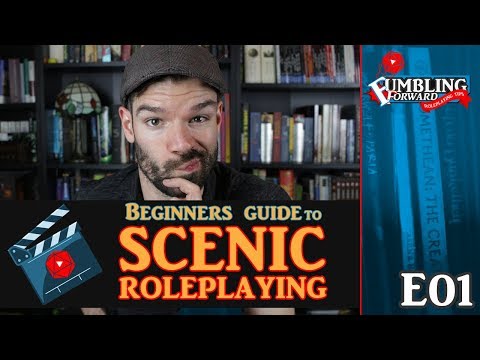
[GM] Game Masters Beginner Guide to Scenic Tabletop Roleplaying - Duration: 31:26.

hello and welcome everybody to my very first episode of Fumbling Forward

name is Maurizio and I feel truly blessed that you joined me for my very

first pilot episode here on YouTube! So, fumbling Forward is a channel about

role-playing games - specifically tabletop role-playing games. You know the strange

hobby where you sit around a table with your pals telling each other stories and

using rules that need 20 sided dice or a 12 sided dice or 10-sided dice and you

got like rule-books that are so heavy that you could kill your grandmother

with it? Yes! That's tabletop role-playing in a

nutshell. We're not only gonna talk about role-playing games in general but

specifically about the job as a game master. So, the game master is the one guy

normally the one guy at the table who is kind of the director for the narrative

you're all gonna play and - yeah - create together and he also is the one who has

all the rules in his head - and if he doesn't have them in his head, he has them - you know - the big book with wich he could kill his grandmother...

What's up with this grandmother thing? ... Strange...

The other part of Fumbling Forward is talking about ya creating your own

role-playing games developing your own role-playing games and how you can come

up with interesting rules, interesting setting ideas and - yeah - how to match both whith each other. So, for my very

first episode I want to talk about my style of game mastering and it's called

"Scenic game mastering". Yeah, because it's based on scenic narration. I think that's

a very good starting point for this channel because we're gonna talk about

quite a lot of stuff that scenic game mastering is the basis to. So, before we

dive right into the topic I would like to take one minute to talk about myself

and to introduce myself to you. My name is Maurizio and I'm from Germany. I am

a hobbyist game master and game developer for tabletop role-playing

games and as you maybe can imagine I have quite a lot of experience in game

mastering and my unique play style. So, everything I'm gonna talk about is my

personal view on how game mastering works best - not necessarily the "best game

mastering" period. So as always with game mastering game developing and gaming in

general there are several different styles and ways to go about it and I

only will cover the one I am familiar with and I think is best. I'm a game

master for I think like 12 years now. I play in regular groups each week and I

develop my own role-playing game for approximately seven years now. As you can

imagine there were quite a few drawbacks during this seven years. Nobody should

actually take seven years for developing their own role playing game - to be honest.

But I'm here to try to help you avoid making the same mistakes as I did and

yeah coming about your game idea a lot faster than I have because I started

over like 20 times. So, if you are from Germany and interested in more stuff I'm

doing I'm also part of a podcasting group about role-playing games

it's called "Pen & Podcast". You will find the link to this podcast here below

and yeah I also am a host of my own podcast called "Hinterm Schirm". It's also a

German podcast - as you maybe heart... and it's about game mastering and game developing

so much of the stuff you will be hearing in "Fumbling Forward" is also part of

"Hinterm Schirm" and if you are interested in further analysis of game mastering

styles and how to develop your own game -??? So, with no further ado let's dive right

into the juicy bits of this episode: we're talking about "scenic role-playing"

and scenic roleplaying, as I said before, is a specific kind of structuring your

narration and a specific kind of game mastering style. in my opinion there are

two big branches of how you can structure your campaign or your sessions

and those are called narration driven style and simulation driven style. Okay

as you see I'm quite interested in the theoretical part of role-playing. So many

of the topics on this channel are gonna be quite theoretical... yeah... I hope you're

okay with that and stay with me. I'm gonna explain to you in detail what I

mean and it's not so complicated as it may

seem now from the get-go... So, you've got these two styles and they are quite easy

to distinguish: The narrationist-style or the narration driven style is more of a

cinematic approach to structuring your narration, whereas the simulationist style

is more naturalistic. So, imagine you as a game master are not only the narrator

but also the "camera man". So you decide which specific aspects of your story are

shown to the players and are played by your players. Okay, let's give you an

example: let's say your players or your group - the characters of your

players just entered a new metropolis, a city, and the first thing they want to do

is go to the tavern - Every character always wants at some point in the story

go to the tavern... And now you have several different options: You could like

start with them entering the gates of the of the specific city, let them walk

through the streets, narrate each street by itself and at some point they manage

to actually find the tavern. Maybe they have to ask around where the tavern is

and some friendly NPC is gonna help them but at some point they will find the

tavern and then yeah we can move on from there. That's the one way. The other way

is a more cinematic way. If we decide that the the journey from the city gates

to the tavern is actually quite boring and there's nothing

really happening in there we can just skip this. We can just say okay you want

to go to the tavern. BAM! You're at the tavern! Opening the

door to the tavern: Now what do you do? You see we're skipping certain parts of the

narration to move the story forward and to drive the story to

get to the juicy bits of the evening. That's a more cinematic approach and we

call that approach narration driven or I would say scenic

game mastering style. For those of you who are really into roleplaying theory there is a specific term there is a specific term that is

normally associated with really bad game mastering and it's called

"railroading". The term means that your story is like a train on Rails and your

characters can't branch out to the left or to the right. They can only go one way

and that's the way the rails gonna lead them. And in this specific analogy you as

a GM are the rails. You decide where the characters go and if the characters want

to do something else that's not in your story you as a GM try to get

them back on the tracks. So normally the big advantage of tabletop role-playing

games in contrast to maybe PC role-playing games or console

role-playing games is that your characters are able to do whatever they

want. Your players can say "okay I don't want to go to the tavern" or "I wouldn't want

to fight a dragon" "I want don't want to talk to this very

important NPC. I would rather kill him and eat his flesh" - .. okay maybe... maybe not

eating his... okay you can... but you shouldn't... and.. -never mind. So, you get the

general the gist and we're gonna talk about railroading in detail in a future

episode. So, normally one could argue that scenic role-playing is a kind of of

railroading. Why is that? Scenic role-playing takes away some of

the agency of the players because you don't have this naturalistic approach.

Going back to our example: players are at the city gates

and they want to journey to the local tavern. Now how they do that is up to

them and you as a GM could give them the opportunity to explore the city by

themselves. So, you're at the city gates and there's this main road or this main

Street right in front of you. There are several dozen citizens walking

about doing their day-to-day business there are merchants there, they're city

guards, they're different alleyways you could use and you could

explore. What do you want to do? So, this approach by asking the players how they

want to go about finding the local tavern is a very naturalistic approach

because you as a GM don't decide what's happening. You don't take away the agency

from the players. The players decide by themselves: "Okay I wanna

ask one of the guards." Okay good. Go to the guards - the players

go to the guards - and ask: "A good day dear sir! I want to go to the tavern! Do you know the

way around?" And the guard answers: "Yes of course I know way around! Who are you?..." and so on and so on

Yeah you could argue that's kind of boring and everybody is like falling

asleep but that's a naturalistic approach and you don't take away any

agency from the players and you show everything. Like I said, when you imagine

you as a GM are a camera man: The camera in the simulationist-approach is never

off. You show everything! Of course there are gray

areas. I'm talking about the extreme on the one side and in the extreme-

simulationist approach the camera is never off. So you would actually show that

character is taking a dump. - Maybe not taking a dump - but you know what I mean. By

skipping all that, that's taking away agency from the players. In some way I

think every GM is doing that. We all do not show each and every path of the

life of our characters. We all like to narrate specific scenes which have

conflict because conflict drives our story. Of course sometimes it can be very

nice to give the characters some room for themselves to decide where they

wanna go next, what they want to explore. But in the end we decide which aspects

of the journey or which aspects of the life of our characters - as a GM - we're

gonna show a players. In our example - I think it's a very good example for

showing the general idea of scenic role playing - but we can take this whole

approach a little bit further: By deciding which scenes we're gonna show

our players we can - to a certain extent - help ourselves coming up with

great story ideas. So, for example maybe I come up with a specific scene in my head

where some bandits are gonna lay a trap for the characters on the road so I

wouldn't skip the road obviously. Because I want the the players to encounter

those bandits on the road. So you see there is a specific idea

behind which scene I gonna show and which scene I gonna skip. And the aspect

that is most important for me to decide if I gonna show something or not is if

there conflict - and if this conflict interesting for my storyline. So, as I

said when I start a game session I'm normally sitting in my bathtub and writing

down some notes and those notes are all about different scenes

and the conflict in those scenes. For example I know that the party is gonna

journey from city A to city B. And when I'm sitting there in the bathtub I'm

thinking about "okay is there something on the way from city A to city B that's

pretty interesting is there something I can come up with it's gonna make a great

story and it's gonna introduce a great conflict to the story. If not I'm gonna

skip that. So for me the most important thing is is there something to narrate or

is it just like "okay I'm showing it because yeah the characters have to walk

all those miles to get to the city." Journeys can be quite

problematic in a way that if you always skip the journey - because you find them

boring or you don't like this "road movie" style events on the side road, players

can easily lose their sense for distance. So specifically in a medieval setting

distances are quite a heavy burden for characters. So moving from one city to

another can take several weeks or even months. To not lose this sense of distance

I sometimes find it very important to give to come up with some ideas for the

journey and to maybe spend an evening or two on a journey and developing

ideas and plot-hooks specifically for the way from point A to point B. So as you

can imagine scenic role playing is all about "pacing". And pacing is a term coming from

narration and constructing stories in general. You will find it in books, you

will find it in movies and it's about how things progress inside a greater

narrational construct and how fast they progress. It's like the heartbeat of

a story. If you want to take this analogy, each beat is a conflict that

drives the story ahead and gives the story some kind of momentum. And the

space between each beat can be longer or can be shorter. And this

this rhythm is called "pacing". And sometimes it's very important to slow

down the pacing to give the characters space. Because if a character is always

only confronted with conflict and doesn't have time to to maybe just sit

around the campfire and talking and reflecting about the things that happened

to them... yeah it's gonna get too stressful.

For example, I talked with a good friend of mine: He told me: "Okay if you gonna

construct a horror game for example. If there's constant fear and constant

terror inside your campaign or your evening, your session, then it's not gonna

work the same way as if you have some downtime. Some feeling of

relief, some comic relief and then going back to this straight forward hammering

in terror into the characters. So you need this "up and down" and that's a good

pacing. Coming up with conflict after conflict after conflict... it's

getting dull at a certain point. So it's important to find the right

rhythm for your story. And that's something we're gonna talk about

specifically in another episode. But scenic role-playing can do other things

as well. If you take examples that are.... yeah.... that are more

problematic I would say - in the eye of some game masters with different play

styles. So let's imagine we have a group of three people: Yeah we have CARL

he's a dwar,f we have OTTO, he's a human and we have RICHARD, he's an elf

so Carl, Otto and Richard each wanna do a different thing. So maybe Carl decides

he wanna visit the blacksmith now. "So I'm gonna visit blacksmith now!" and

Otto decides "Okay I'm a human I need I need money. We all need money." So he's

visiting the local bank. And the last one is Richard the elf. He maybe

decides: Okay he wanted to smoke some fantasy weed in a bar. So each of them is

going off to some different locations. So now something interesting is happening

with scenic roleplaying. okay now we got our three characters and one of them as

you know is Otto. And as we said Otto is going to the bank and maybe we decide as

a GM "Okay when Otto is going to visit the bank

there will be like robbery taking place" So actually Otto is

waltzing in to a robbery. So as Otto enters the place from the front door

maybe the robbery already took place and the bandits turn around with sacks full

of money and coins and they see Otto waltzing in through the front door. And

Otto - being Otto and a hero - he's unsheathing his sword and calls them to

surrender. So now we got a conflict in the scene and that was the reason why we

actually decided to show this scene. As you remember in scenic role-playing we

could've just said "Okay we skipping this part of the story because there's

nothing interesting happening at the bank. So there's no need for us to

actually show what Otto is doing there." But since we decided "Okay there will be

a robbery taking place" it's maybe more interesting and let's show that. Okay so

far so good. Now what we could do is taking one of the other characters for

example Carl, who was at the blacksmith, and putting him in the scene. Pulling him to

this scene - to Ottos scene. Okay and now things get interesting!

Tthe the player of Carl never decided to - never decided by himself to move to the

bank after he visited the blacksmith. Maybe he only wanted to get a new axe or

to sharpen his weapons and then maybe moving to the tavern to his friend

Richard the elf. But you as a GM decided it would be more interesting for the

dwarf Carl to have a scene with the human Otto in the bank while there's a

robbery taking place. Because there are several different reasons for this: The

first reason could be maybe it's an interesting dynamic between Otto and

Carl going on and you wanted a scene with both of them alone - without

Richard. So they can yeah maybe resolve some conflicts between them. Maybe it's

interesting because Otto is normally not the quite aggressive guy and Carl is

very aggressive - being a dwarf. So there could be a conflict of interests

between them if they are both confronted with the conflict of the robbers. But

whatever reasons they are, you decided that the dwarf Carl is introduced to the

scene of Otto being at the bank. So you took away agency from Carls

player. It's totally ok to do that in my opinion. Some of the GMs will now say "Oh

my god! Okay, that's totally railroading. Carl never decided to visit

the bank and that's totally railroading! And never do that!" But I think unless you

are doing something that is totally against the motivations of a character...

For example let's say the dwarf Carl swore an oath to never visit any bank then

it would be a very bad idea to come up with this way of introducing Carl

to the scene. But unless there's a real good reason for Carl

not to to help out his friend Otto at the bank.. Why not?

Obviously Carl could have said "Okay I want to visit Richard because I have

some stuff I want to go over with Richard concerning our next adventures

and so I will never decide to go to the bank!" And it's totally fine. If the

player of Carl decides: "Okay excuse me GM,

I don't want to go to the bank after the the blacksmith. I clearly decided to go

to Richard." That's okay! So you go with that and you say "Okay

sorry! You're not in the scene. Otto, you play the scene by yourself." That's

totally fine. But in my experience most players are quite okay with them

being pushed to certain scenes. Because they then get interesting and new

opportunities for them to act. Because they - you as GM in scenic role playing -

it's your job to come up with interesting conflicts. You actively

decide which scenes you're gonna show. And therefore you should have a very

good idea or a very good selection mechanism which scene is interesting and

which is not. And so in generally players can trust you and come to trust

you in your decision whether a scene is interesting for them or not. So if I

decide that would be a great scene for Carl to help Otto at the bank

normally my players trust me that it's a real good decision. If I - for some reason -

did not calculate that - for example, Otto does not have any motivation

to do that or to be there, whatsoever, then as I said that's totally okay and

that's totally fine and we can skip that part and leave Otto there alone and

maybe even decide that Richard - totally baked - enters the bank

instead. You can create certain constellations in scenes without asking

the de players to do so. And it's a specific style

of narrating and the players should know that this is your style but it helps you

a lot especially in scenes where characters are separated from each other

and you can get them back together again. As you probably noticed this format and

Fumbling Forward in general is not railroaded. I tend to digress from the

path and touch certain side-topics all the time. But I think for a first

overview of what scenic role-playing can do - for the first episode that's enough.

The term scenic road playing is a little bit clearer now, I think. There are some

aspects that are quite confusing still, but we're gonna clear them up in future

episodes. Especially how to create your own scenes how to pick the right

ingrediences and what the right ingrediences are for creating really

great scenes. Obviously there are many many more aspects about what scenic

role-playing can do and can't do and there are quite a few question marks still

there and we gonna try to reduce them to zero in future episodes. So if you got

some comments, critique, praise or just want to contact me or give some warm

words to me and support me please hit the comments section below!

I will comment you back on those as soon as I see them and also: If you liked this

first video of mine please consider also to give me a thumbs up or even subscribe

to my channel! That would be really really awesome because - as you already

know - this is my very first episode and my very first channel here on YouTube

and I would really appreciate to create a whole community here! Last but not

least I want to give a big shout out to those youtubers who inspired me to move

on with this endeavor and to create my own YouTube channel. Surprisingly, they are

not tabletop role-playing channels but they

are "Dark Souls lore hunters" so maybe you know the game "Dark Souls" and "Bloodborne".

They are the lore hunters, they dissect the game and look for clues about the

hidden storyline in those games and I really enjoy watching their

channels and through they're very very very good content they inspired me

to come up with my own channel so a big shout-out to "JSF", "Sinclair Lore" and Aegon

of Astora! And I linked your channels in the comment section below. So if you are

like me and do not only enjoy talking extensively about tabletop role-playing

games but also enjoy lore-hunting in the worlds of Dark Souls and Bloodborne

please consider taking a look at the aforementioned great creators of lore

hunting videos and if you enjoyed my video please also consider visiting me again I think I will upload the next video or

next week if you want to stay tuned to what I'm doing in my free time and to

when I will upload the next video - maybe also consider visiting my Twitter page. I

also put it in the video description! Until then thanks for watching guys and

have a very great week!

For more infomation >> [GM] Game Masters Beginner Guide to Scenic Tabletop Roleplaying - Duration: 31:26.

-------------------------------------------

Ep2 Deep Breathing (Belly) vs Shallow Breathing (Chest) - Check Yourself Guide (Singers Alert) - Duration: 2:55.

Hi this is Bevlyn from SingingTechniques where you get tips and

insights into singing. So in my previous video I share two tips on how you can

breathe correctly for singing and in this video I'm gonna share with you how

you can check yourself to make sure you are doing them correctly. And if you

don't know how to do it, yet I would highly recommend that you check out my

previous video. And if you have, here is how you can check yourself to make sure

you're doing them right. Now place one hand on your chest and the other below

your belly button and breathe in through your mouth as normally as you can. Now

the best way to do this is to place yourself in front of a mirror so that

you can adjust yourself if necessary. What you should observe is that when you

breathe in and out your chest and your shoulders should not be rising and

falling like this. Or. If you see that you are doing this, you can limit these

actions by looking in the mirror and adjust yourself accordingly. Now it

should be pretty easy to stop your shoulders from moving up and down but if

you see that your chest and belly are moving at the same time, it's highly

probable that you are using shallow breathing, which is reflected by the

rising and falling of your chest. So why is it important to make sure that your

chest doesn't rise and fall when you breathe in and out? If you do that you

will experience a tightness in your chest especially if you draw in a lot of

air or if you try to sing and sustain a long line. But the key to good singing is

not to draw in a lot of air. The key to good singing is

Deep Breathing! And one very very important thing you need to take note of

when you are practicing belly breathing is to make sure that when you breathe in,

your belly inflates and when you breathe out, your belly deflates. If you do it the

reverse way, I can guarantee that you are using Shallow Breathing because even if

your belly is moving in and out, your chest is moving up and down too - like this

But the correct way should be

So does it mean that every time I sing a song, my chest and my shoulders do not

rise and fall? Yes! So spend a little time exploring and keep it fun! Do watch out

for my next video where I share more tips and insights into singing. And

remember to subscribe to this channel if you want your weekly video and hit the

bell if you don't want to miss an episode. See you in the next one.

For more infomation >> Ep2 Deep Breathing (Belly) vs Shallow Breathing (Chest) - Check Yourself Guide (Singers Alert) - Duration: 2:55.

-------------------------------------------

Leveling up a new character - EXP-ing "guide" - Duration: 9:07.

Ahoy!

Countless times have I been asked for tips on where and how to level up your character,

so when the update with the new combined level achievements arrived, I decided to open the

8th character slot and start a whole new character, recording its progress at most key points.

I intend to let this serve as a guide, but I'm going to emphasize now: there are probably

other, and maybe more effective ways to gain exp, but this is how I did it, and I hope

you will also find it helpful and maybe learn from it.

Also, during most of the video I had a level booster premium service on, and some blessing

beads with some leftover time, so that means around 250% exp bonus altogether.

So for the first few levels, it was just completing quests.

This works quite well until about level 50 or so, since you're basically limited to the

first 3 maps at that part.

However, this went a little slowly for me, and luckily there was a friend who was levelling

in the lvl 190+ map called Senillinea or whatever.

Anyway, he allowed me to leech some exp in party.

You should also do that if you're in the mood for a jumpstart.

During exp bonus events you can often find people in the party search, and I'm sure they

will let you join their parties if you ask them nicely.

Alternatively you can go to the entrance of eternal chaos arena and ask anyone you see

coming out to let you join his party for some exp.

Once you reach level 55, Lake in Dusk becomes available to farm, and that's also a nice

source of exp.

Namely, the orcs at the very beginning have insane exp compared to... well, everything

else that's available at that level.

But other than that, you should also continue doing quests.

A little hint: the scenario quest at lvl 52 lets you choose a nation to support, so you

should choose the one that has the winning bonus that week.

That choice won't be permanent, as you will be able to change your nation for free at

level 95 with another quest.

But until then, you gain 10 more % of exp bonus.

It might take a lot of runs of Lake in Dusk to reach the next checkpoint, so if you had

a partner to help you with exp leeching, don't give them up yet!

At lvl 70, Ruina Station is unlocked, and that's where I reached lvl 100 in no time.

You'll want to get to the part where those buffaloes are, the white ones.

In that little arena, for every statue you destroy 2 of those will spawn, so you can

probably already guess how to do that.

Unfortunately, since I chose force blader as the new character, my area of effect skills

were ... let's say very limited.

I actually mostly used magic cannon skills when BM2 was on cooltime.

From lvl 95 you can also enter Volcanic Citadel.

I actually wasn't aware that they boosted the exp gain in there so much, just accidentally

discovered it while doing the battle style up quest.

But it's quite awesome.

I normally would've suggested Tower of the Dead B1F, but this is much better and Ruina

Station will help you reach its minimum level anyway.

Now the hard part comes after level 105 until 110.

This is the part where Volcanic Citadel's exp becomes too low, and Lakeside isn't accessible

yet.

I saved most of the quests for this part ever since level 70-ish.

That allowed me to reach level 110, and from then on, it was Lakeside and Forgotten Temple

time.

Actually FT was better in my case, but it's pretty damn hard to do at that level without

any proper gear, and I didn't have that.

So basically what I did was kill the gricks at the beginning, then exit and do it again.

1 run gave me like over a whole level so I didn't have to waste too many entries.

I gave Tower of the Dead B2F a try too, but it wasn't too spectacular either for its difficulty

at that level.

Things speed up drastically from lvl 120.

That's where you can enter Illusion Castle Underworld.

I used the orcs after the 2nd boss to level up.

Talking to all of those altars and whatever spawns a whole bunch of them, and they are

an amazing source of exp.

Just look at that exp bar jumping!

The orcs in there are lvl 135, but even a few levels after that they provide a decent

amount of exp.

They respawn several times in 1 run, so you can either go on and try to get to the end

of the dungeon, or just go and have a cup of tea while waiting.

Alternatively, Altar of Siena B1F has plenty of good spots for EXP farming and the mosters

in there are lvl 140.

I made several levels in a run using the following method: get to the last boss, and hit it once,

then let it kill you, relog, or just run back to the beginning of the dungeon and keep farming

those rolling seed things until there's like 10 minutes left of the dungeon.

Then return to the last boss, and you'll have a few hundred mutant hounds to farm for exp.

I kinda left Eternal Chaos Arena to the end of it, because it's almost impossible to farm

at level 130 without any help.

We teamed up with RtnShielder, so he also levelled up his new character and I levelled

this one in a few runs in there until at around lvl 165.

That's where I was able to do the first few waves alone.

Exp was still pretty decent there.

A tiny sidenote here: there are countless EXP service sellers around who can help you

skip the hassle of leveling for days.

However, the service isn't cheap.

A while ago I made a tool that lets you do various calculations with EXP.

If you want to check it out, there's a link to it in the video description.

My force blader character is currently over lvl 170, where I stopped because I reached

the achievement's required levels.

However, from then on, your best bet for leveling is also Eternal Chaos Arena, doing the first

6 waves.

That, and Arcane Trace are basically your only reliable EXP sources until lvl 190.

I'd also like to point out that if you farmed your levels in dungeons or maps ever since

lvl 110 or so, you will have plenty of scenario quests left to finish.

They were designed to give you around 10 or 20% of the EXP progress of their levels, so

if you do them all, you're likely to gain a few more levels in the process.

This is the point where many players start farming other dungeons.

I can recommend Hazardous Valley, and Altar of Siena B2F to do daily for some exp.

And speaking of daily, the officer of Bloody Ice has a daily quest that can give your EXP

bar a leap every day for barely any effort.

From level 190 up until overlord level 100, there's Senillinea, or Glacies Inferna to

farm.

Glacies Inferna might be the best source of exp in the whole game, however it's also one

of the hardest dungeons, so you won't really be doing that until lvl 200 and an awesome

set.

Daily quests after lvl 190 give you 2% of your current level's progress, so even if

you don't have time to play much you can log in for 3 minutes to do that and eventually

level up.

And of course, scenario quests go all the way to lvl 200, so just by doing those and

daily quests you can get like 15 to 20% of each level's progress right after levelling

up.

Just remember, if you DO reach a high level, you will be able to help people who are starting

anew. So if you have a free spot in your party, you can let low levels join you.

You will still get the same amount of exp, so for you it's no effort at all, but they

will be very thankful for your help.

Well, mostly anyway... people who joined my parties usually didn't even bother to say

hello, let alone thank me for it.

Anyway, today's topic is not about the degredation of people's social skills, but more about

levelling up.

So, let me know in the comments if this video helped you, and feel free to suggest your

own methods if you farmed your EXP elsewhere!

Also, a few irrelevant announcements: First of all, I'll be going on vacation for a while,

so there won't be any new videos until about August, or the end of summer.

And second, I've created a PayPal donation link that you will be able to find in the

description of my videos from now on.

If you found any of my guides helpful, or would just like to support my efforts with

maintaining this channel and developing my character, I would definitely appreciate that.

Ahoy

For more infomation >> Leveling up a new character - EXP-ing "guide" - Duration: 9:07.

-------------------------------------------

Top 10 Important Tips No One Talks About! - Overwatch Guide - Duration: 11:56.

You are probably tired of hearing all the dumb basic tips like group up before

each push and use your olds to gather tips which probably helped you while you

are in the first 10 minutes of playing the game but really aren't all that

useful anymore today I'm going to teach you the top overwatch tips that nobody

seems to be talking about my name is Nathan and welcome to Blizzard guides

this guide is going to cover all sorts of tips ranging from interesting

mechanics to things that people seem to just forget - oddball things that people

need to know about the game there isn't necessarily a skill range that these are

intended for so some of these you may have already known if you've been

playing the game for a long time and some of these might not even just apply

at your skill level I picked these all because they were things that are really

useful to know if you didn't already and there will definitely be a few that you

didn't know anyway let's get right into this guide at number 10 we're going to

be talking about one of the most important things in overwatch which is

identifying win conditions learning to identify win conditions in a game like

overwatch will give you one of the biggest boosts in your understanding of

the game as well as a big boost in SR the term win condition has been a

popular buzzword in the overwatch community and specifically in the

overwatch tutorial videos but it is legitimately something that every player

should learn that isn't really just explained in simple terms

in short identifying the win condition means taking a calculated look at the

enemy team's positioning their team composition what's doing a lot of work

for them and what the kingpin of their comp is let's see if the Makri on the

high ground is doing lots of work for the team you should definitely get your

team to flank and take that lone McCree by surprise so that you can get rid of

the crucial threat and roll the fight with a bit more ease if the enemies

healers are healing for free and keeping everything alive trying to counter those

heals by either ripping them away killing them or an tying the tanks with

a maid or something like that can really help you to win fights with more ease

the best way to naturally learn when conditions is just learning from your

own losses if you lose a fight quickly identifying what went wrong and

remembering that if you encounter a similar situation where the enemy mares

what you did is really useful to learn at number nine we've got a much simpler

one but one that is often neglected armor armor is such an important

mechanic in this game that I am very surprised that not too many players

really understand how it works so I'll do my best to explain it in overwatch

all damage is applied in small packets of damaged bullets work in an obvious

manner but heroes like Winston and Morris do not the important thing that

you need to know is that while Winston does 60 damage per second the damage is

applied in packets of three damage each so you can think of it like little tiny

bullets that get shot at a specific rate so that each three damaged packet does a

total of 60 damage points every second armor relies on the fact that damage is

delivered in packets so bear with me the armor takes this packet of damage and

does one of two things if the packet of damage is less than 10 damage then it

cuts it in half if the damaged packet is above 10 damage it subtracts 5 damage so

if the damaged packet does 3 damage the armor makes it only do 1.5 points of

damage and if the damaged packet does 50 damage the armor makes it only do 45

points of damage this means that for heroes like Winston whose packets of

damage only did three damage and divas whose packets do two to 0.6 damage

Armour reduces that damage by 50% this is a huge advantage so when playing

heroes like deva winston moira Reaper or tracer whose damage packets are always

less than 10 you should be aware of the fact that Armour cuts your damage in

half however if you are one of those effort mentioned heroes you can use your

melee or more bursty abilities so something like divas micro missiles to

break through that armor melee is actually really useful for this and also

for much more which leads me to my next point at number eight using melee melee

is probably one of your best assets to finish up kills or combo more damage

while fighting at close range if you watch any high level player you'll find

that they use melee almost every close-range fight that they have even

going as far as completely relying on melee in certain combos with yours like

doom fist tracer and Genji melee is also a really good alternative when doing

damage to an enemy with lots of armor if you don't have an ability that does

bursts of damage the melee does 25 damage instead of its usual 30 when

attacking armor so using that as an alternative to the tickle gun that you

have with something like Winston or Deva is very effect

build a strong habit of utilizing melee and you'll find that you'll have a much

easier time securing kills that might have normally been a bit more difficult

at number seven a slightly more advanced but very very useful mechanic you're

able to block two of the most powerful defensive bolts in the game with a

simple shield both Lucio and sanada's Ultimates are blocked by enemies shields

as they require line-of-sight this is something that I actually only recently

learned but that has completely changed my interactions when countering an enemy

defensive ultimate for example when yours aria grabs if you're playing Ryan

you can use your shield to divide the graph into two blocking the heels from

transcendence to have the enemies in the grab if you're playing something like

Winston and you think that the enemy lucio will alter you can use your bubble

around the Lucio to block the sound barrier from reaching his teammates

which is really valuable use of your shield this mechanic is definitely

unknown by a lot of players so using it to catch the enemy off guard is a really

high level use of barrier mechanics just remember that whenever you're playing a

tank specifically something like Ryan and Winston and this does sometimes come

into account when you're playing Arisa but it's a bit more difficult to pull

off just remember that you can block that transcendence or that lucio barrier

if he's just about to use it at number six fixing your input lag this

one only applies to PC players but basically when you're playing the game

your computer has to take some time to draw the frames and put them on your

monitor most of this is done on your graphics card or GPU but sometimes

certain graphic settings are forced to be run on your processor or your CPU

when the game it registers your input like pressing W or Mouse one which a lot

if you don't do the CPU must take some time to process that input and then

react if you have a lot of graphics settings that are loading down your CPU

the CPU might lag a bit to register your input leading to what is known as input

lag this can be fixed by setting specific options to lower settings to

increase the responsiveness of your mouse and your keyboard which might at

first not be too noticeable but as you play more and more with the

input lag reduced you'll find that you'll land some crazy shots that might

not have been normally been able to be possible due to input lag I'll put on

the screen the recommended settings that I use that have reduced my input lag

from 50 milliseconds to about 7 which is a pretty crazy amount

at number five a quick one that a lot of players don't know about quite simply

the payload heels health that's a really good incentive for those of you who

don't like to touch the payload but basically the payload itself heals about

ten health per second for the attacking team this is really useful if you're

playing an ultra mobile hero like tracer or Kenji that might need to get those

last points of health up or alternatively if you just want a

teamfight but your supports are still returning from spawn you can stand by

the payload to get topped off or halfway healed in the event that you're ambushed

by some enemies at number four utilizing audio cues this is something that you

accrue after playing this game for a very long time but you can really speed

up your learning process if you really start to look for it in a nutshell every

single ability in the game has its unique sound or voice line and typically

every interaction also has its own voice line or sound you can go as far as hear

an enemy na you sleep Dart and then right after here in a lie fall asleep

this is really useful because once you really learn every sound you'll be able

to have game awareness like none other knowing what abilities the enemy has up

as well as what connected and what didn't treat hearing like a radar in

this game as it was designed with sound in mind from the ground up at number

three the hidden control menus in the game quite simply if you go into your

settings menu and then go over to the controls tab at the top right you'll see

something that says all heroes if you scroll up or click on that you'll find

that you get a drop-down list of all of the heroes in the game if you click on a

specific one you'll find that some heroes have specific hidden settings

that you can able or disable or modify to your own liking there are a few very

specific ones that you should always have turned on no matter what and others

that are at your own volition a few examples would include on lucio you can

turn a feature called allow backwards wall right on and be able to wall right

in reverse this also allows you just to do many fancy things as lucio and should

really honestly be turned on by default you can change the scope sensitivity for

Anna and Widowmaker allowing you to customize your short range versus long

range effectiveness when scoped in another good one is for mercy you can

set the beam connection to be toggleable rather than hold to connect and also

please just turn see allied health bars on for all heroes it'll just help you

know whether and the ally needs to retreat or not you can also take this

customization further by setting custom control sets for

specific heroes some including scroll wheel jumping for lucio putting melee on

right-click for tracer putting fares concussive blasts on right-click in a

halving Zen's or Vaughn scroll wheel these custom controls allow you to have

more effectiveness on specific heroes giving you a competitive advantage all

you have to do is go into the settings menu and set specific control sets for

specific heroes to your own liking at number two mastering hero switching

this topic honestly deserves its own video so I'll cover the basics now and

in the future I'll cover this more in depth later you really should have

around 7 to 8 heroes that you can reliably play eventually opening up to

learning most of the heroes in the game so that you can flex and really use hero

switching to counter the enemy most effectively figure out what makes the

enemy comp work and learn what their weakest spots are the most obvious one

is that if they don't have a hits can play something like Farah you can also

really just identify what kind of range they have so if they don't have any

ranged heroes playing something like McCree soldier widow or Hanzo can really

demolish their comp and if they have ranged heroes playing something like

very mobile heroes can come to them effectively you really need to learn

what comps counter what comps and really learn the rock-paper-scissors meta game

that overwatch has when it comes to hero switching hero switching is a very core

mechanic to overwatch but I see a lot of players not utilizing it so really

learning what hero switches work in the game can really help you win games a lot

quicker and lastly at number one grouping grouping is such a valuable

tool in overwatch that is recently becoming more and more accepted by

Blizzard in the past there were specific mechanics in the matchmaker that really

made it more difficult to reliably queue as a group but now that those have been

lifted you'll be able to actually play a competitive game as a group the most

effective way to group is in a six tank as you have a very significant advantage

when doing such a stack as a matter of fact the average win rate for six decks

is sitting at around 53 percent as of uploading this video which at first

doesn't seem like a huge advantage but when you take into account that all

other group sizes sit at a win right within 0.5 percent of 50 percent you'll

realize that 6 decking is a very good way to climb very fast with the very

near edition of the lfg system or the addition of the lfg system as it might

come out when this video is uploaded this will become more normalized so

finding 6 players that fit your need as a player is a really powerful way to

climb and learn the game in a much more fundamental way you're really missing

out on a lot of the game and six decking will bring light to a whole new facet of

overwatch that you probably haven't seen if you haven't been regularly playing

scrims or pugs anyway I hope you guys enjoyed this video let me know what

guide you'd like to see featured on this channel next I legitimately read all of

your comments and I do take inspiration from what you guys leave down below so

please leave a comment if you have anything that you want to learn about

and if you have any questions about the game in general leave a comment or

follow me on Twitter and tweet me on Twitter as well if you enjoyed this

video leave a like as it really helps us out and if you really really enjoyed it

consider subscribing it getting notified by hitting the bell icon when we upload

as we upload tips and tricks videos like these as well as epic moments videos

showcasing the best plays from around the globe anyway you guys enjoyed this

video have a nice day my name is Nathan and this was blizzard guides

For more infomation >> Top 10 Important Tips No One Talks About! - Overwatch Guide - Duration: 11:56.

-------------------------------------------

The Ultimate Guide to Forex Essentials: Current Account and Capital Account Ep7 - Duration: 4:55.

For more infomation >> The Ultimate Guide to Forex Essentials: Current Account and Capital Account Ep7 - Duration: 4:55.

-------------------------------------------

Your Guide to Estate Planning - Duration: 3:19.

My name is Patrick Pacheco, and I manage the trust and asset management division of Cadence Bank.

Why is the state planning important? Well, estate planning gives you the opportunity to protect your loved ones in the event of your dead.

It allows you to to have control over who inherits the assets you've worked so hard to build in your lifetime.

With proper planning you can fight income survivors, reduce income and estate taxes and you protect your assets.

And I think most importantly it allows you to make your wishes clear so your family understands what you wanted to have happened.

And that way you eliminate potential for discord and or even litigation.

So, what are the steps to create an estate plan? Well, the first thing you need to do is establish your wishes.

What assets do you have? Who do you want to receive those assets if your dead?

Who's going to be in charge of carrying out that plan? Your executor or trustee?

Is that a child? Is a spouse? A friend? Is it our corporate executive like a suspect?

If you had a terminal condition, you'd want the family to have the burden of determining what happens to you

Or you'd like to determine yourself, If you need to determine yourself, if you need a living will and

you may also want to consider utilizing a revocable trust in concert with a bill. This gives you the opportunity

to have management of your assets in the event you become incapacitated

The second step: protect your assets.

Trusts can provide management assistance for those beneficiaries that can't manage their own assets. If you have a minor child or an adult

incapacitate child, name a guardian who will give you an approach in taking care of them when you're not able to do so.

Life insurance can provide income replacement in the event of the death of a primary wage earner or

even in the event non-wage earner. The primary wage earner may not be able to work as long

or as hard and make as much money.

If you have a

Taxable estate or a potentially taxable estate, you may want to think about taking that life insurance and play schemed or irrevocable life insurance trust.

They're liable to removing that from your estate and not have a tax deducted from your spouse. Step 3: reduce your taxes.

If you're married, take advantage of the unlimited marital deduction

Take advantage of the applicable exclusion amount that's the amount we can all pass tax-free a death.

Take advantage of the annual gift tax exclusion.

If you have assets that have substantial future depreciation, consider gifting those during your lifetime. Allow the appreciation to occur outside of your state.

Also, think about charitable vehicles,

charitable trusts, foundations. Something that allow you to carry on your philanthropy and also reduce a state potentially income taxes.

Step 4: protect your business if you own a family business make sure you have a management succession plan in place.

This may or may not include family members. Also, make sure you have by cells in place for founding business interests.

I know it's a lot to think about but there's some good news here.

You don't have to go through this alone. At Cadence Bank,

we have qualified estate and trust advisors who can help you work through these issues and come to a good solution

Contact us. We're here to help.

For more infomation >> Your Guide to Estate Planning - Duration: 3:19.

-------------------------------------------

MyJourney's Guide to... The CSC! - Duration: 9:03.

FELIPE: Hi, I'm Felipe!

NOAH: And I'm Noah.

FELIPE: And we're running MyJourney, which is happening at the UC Commuter Student Centre.

AIDAN: The Commuter Student Centre, or CSC, is the place to hang out if you're a commuter

at University College.

It's located right in between Whitney and Morrison residence halls, so residence students

are totally welcome too!

The CSC's made for relaxing and hanging out with friends in between classes, and is also

home to a lot of special events; like MyJourney, which is a smaller version of Orientation

designed specifically for first year commuter students.

If you sign up, you get to take part in teambuilding activities, chances to explore UC and UofT,

sports and active games, a fun Murder Mystery event, showing off your talents at our

Open Mic Night, mingling with UC alumni at our Alumni Social, and just hanging out with all

the new friends you make, which can last your entire time at UofT.

FELIPE: Now Noah's going to tell us a bit about MyJourney.

NOAH: You know, as we said, the two of us, we're running MyJourney.

We've both been MyJourney leaders before.

It's very important to us, and as commuter students ourselves, MyJourney has been formative

in getting us introduced to the community and teaching us a lot about UC, introducing

us to student politics.

We made lots of friends there, and as a commuter, you're not a part of residence, you don't

get forced to hang out with a bunch of other people.

Instead, you have to go home every day, and it can be really tempting to just go to class,

go to the library and go home.

We don't want that.

We want you to make friends, and we want you to smile, just like I've been doing.

Smiling.

And through MyJourney you can make some life lasting friends, that you'll be with through

your university career, and maybe hopefully you'll stay in touch after university, but

that's probably a long time away for most of you.

FELIPE: Awesome.

AIDAN: The CSC has a lot of space to recharge; not just your phones.

One example is the grey room.

FELIPE: Ok, you can relax.

I don't know what we were just doing, but that's exactly what you're going to get in

the CSC.

There's a lot of places to hang out, like the white room, which we call based on the

wall.

Some people call it the grey room because – pan to me – grey room – now pan over

there, pan to the grey wall – grey room.

But, you know, it's the great room.

That's what we all call it.

It's the great... room.

AIDAN: And right behind the grey room is the orange room, where the CSC's many board games are

stored.

FELIPE: Welcome to the orange room experience.

Here we play games.

We're playing Coup right now, right friends?

Smile, c'mon, smile to the camera guys, everybody smile.

We're playing Coup, we're having a good time, we're having a blast.

You've got a bunch of games.

You can even bring your own games, and play with your 3DS.

But we're not actually playing.

These aren't even the real cards.

This...

I fooled you, man.

We're just doing... a video.

NOAH: This is a bit!

FELIPE: We're just shilling the CSC for you guys.

Please come!

Please?

We're gonna... do you want... look at these people's smiles.

Do you want them to keep smiling, more and more?

Then come!

We want to see your faces.

We want to smile.

Please?

You'll smile too, I promise.

AIDAN: And as we mentioned, a lot of special events happen in the CSC all throughout the

year, like free pancake brunches, board game and video game events, like Smash tournaments,

holiday parties, trips to places like Second City and Ripley's Aquarium, and the Commuter

Assassins game.

A lot of these events are planned by the UC Off-Campus Commission, or UCOC, run by Felipe

and Noah, or the CoCos, who are your Commuter Dons.

And both of these groups can help you plan your own event, if you have an idea.

KSHEMANI: Hi, I'm Kshemani.

MICHELLE: And I'm Michelle.

KSHEMANI: And we're your Community Coordinators.

MICHELLE: Or CoCos.

KSHEMANI: Or Commuter Dons, for next year.

MICHELLE: 2018-2019... school year.

KSHEMANI: We work for Student Life to plan fun and engaging events for commuter students.

MICHELLE: Cool.

We have office hours throughout the week, so come drop on by!

AIDAN: Kshemani, Michelle, Felipe and Noah all work really hard to create a space where

you can find a lot of resources, to help you.

For example, the CS– FELIPE: –C has a kitchen.

You have a refrigerator.

You've got cupboards, with cups.

You've got another cupboard, with foam cups!

You've got a coffee maker.

This is the cheapest coffee in the university.

Guess why?

It's right here, it's up for grabs.

You've got a used co– it's some person's trash.

You've got...

I forgot the name of this.

NOAH: Kettle!

FELIPE: And there's going to be a microwave soon.

We'll figure it out.

You can wash your dishes.

Please do.

Don't leave them dirty.

You've got a knife.

And trash.

AIDAN: Of course, the CSC's not all fun and games.

FELIPE: Now we're going into the study room.

You can – I hope you like studying, because you will be, at UofT.

And at UofT, is a universi–T, and you should be STU–DY–ING.

Get it?

So, you've got boxes, this is – we'll get rid of this.

You'll be able to study on this table, don't worry.

We've got Mouse Trap in the study room, and a Batman poster.

Batman poster.

That's all you need to study.

You just need the Bat...

Batman looking at you, a table with boxes on it, and my smile.

Get my smile.

This is the – GET OUT OF THE SHOT, MAN!

I'm kidding.

It's just a joke.

This is the locker space.

You can get a locker rental for $5.

You get to rent it for the entire semester, and you get to put all your stuff in here.

Keep it in here, just like you would in high school.

This is like... we're cool.

But that joke's kind of lame.

This is, uh...

Jeffery.

Jeffery, he's one of our stuffed animals at...

This is one of the stuffed animals you find, he's a pal at the CSC.

You can have fun, you can hug him, you can cuddle with him, just don't make it weird.

Get out of here.

NOAH: Do you want to do it, or...?

FELIPE: Yeah, okay.

MyJourney is $35, but you get a $5 discount if you register for Orientation.

So you're going to be making money.

You're going to be making $5 by registering for MyJourney, I swear.

Follow us on social media, or whatever.

I think we have a... no, I don't think we have a LinkedIn.

Do we have a LinkedIn?

NOAH: I don't think we do.

FELIPE: Not a LinkedIn.

We have, like, Instagram, Snapchat... it's on the screen.

NOAH: MyJourney is going to happen July 28-29.

It'll be a lot of fun.

You're going to stay in a res room for the night.

It'll be great.

AIDAN: Thanks for watching!

Whether you're a commuter or a residence student, we hope you can see that the CSC has something

for everyone.

And don't forget to register for the MyJourney retreat!

We hope to see you there!

NOAH: Come to MyJourney!

FELIPE: Come to MyJourney!

NOAH: Yay!

FELIPE: Yeah, yeah.

NOAH: You get to meet us.

For more infomation >> MyJourney's Guide to... The CSC! - Duration: 9:03.

-------------------------------------------

The Get-Started Guide to Investing: What "Invest Like a Woman" Really Means - Duration: 1:44.

- Sometimes I'm asked "What's harder,

"running a startup or running Merrill Lynch?"

Running a startup is much harder.

I used to have a corner office.

Now I sit at the end of a long desk back there.

Why?

Well, it goes back to one morning,

I was putting on my mascara, and somewhere

between layers one and two, I had this big aha moment.

I've been working in financial services

for more than two decades,

but something really hit me that day.

You see, in our country,

we have an enormous retirement savings crisis.

We're undersaving for retirement by trillions of dollars.

And what I realized that day

is it's really a woman's crisis.

That's because we women live longer than men

and we retire with two-thirds the money of men.

It's in part because we're paid less

and we take more career breaks.

But it's also in part because we invest less,

what we call The Gender Investing Gap.

It's not our fault.

The investing industry was built by men for men.

It's all about out-performing the market,

picking the best stock, not about explicitly

taking into account women's longer life spans

and reaching our financial goals.

The good news?

We can fix this and live the lives we're meant to live.

And when I had that aha moment,

I knew that I really, really, really

had to launch Ellevest to work to close that gap.

Ellevest is built for you.

It's built by women, for women,

with a mission to help women reach their financial goals.

And working with an incredible team

to fulfill that mission every day

is hands down the best part of my job.

For more infomation >> The Get-Started Guide to Investing: What "Invest Like a Woman" Really Means - Duration: 1:44.

-------------------------------------------

Your guide to the BEST sleep of your life | SA Live | KSAT 12 - Duration: 3:41.

For more infomation >> Your guide to the BEST sleep of your life | SA Live | KSAT 12 - Duration: 3:41.

-------------------------------------------

Try Being A Tour Guide | SA Live | KSAT 12 - Duration: 5:13.

For more infomation >> Try Being A Tour Guide | SA Live | KSAT 12 - Duration: 5:13.

-------------------------------------------

Beginner tips for Clash Royale 2018 - Clash Royale beginner strategy guide -Best beginner deck - Duration: 6:16.

Hello, I am clasherjay and welcome to my channel

today we are going to talk clash royale and the topic is

the beginners tips&tweaks

you need to know to

to win battles so if

are a beginner in this game then this video is certainly for you

if you are an expert then by all means

add tips that you want to give in the comment section below

So lets start guys!

Firstly start with the deck of cards you got

It must comment a good balance of offensive

and defensive minded cards. Also you

need to know the individual strengths and

weaknesses of different troop cards

For example let's look at my deck of cards.

The giants are great offensive minded troops

and can also be used as a distraction while enemy attack

cause of their huge hitpoints

the skeleton army is a great defensive minded troop

and works like a charm against prince,hog rider or

any other offensive troops except valkyrie

So what I am trying to say is you need to know the strengths

and weaknesses of each of your troop card

and that will help you enormously in battles

In this video I will show you an exciting battle

that I won from the jaws of defeat

So we will see the battle now! and at times I will point you out the key

tips &tricks that I used in this battle

Now see the first hand of cards you got

If you have a good offensive card then use it by all means

and if you don't have it then wait for the opponent to attack

Don't rush into things too quickly!

So I did get a giant and I used it with the musketeer card

He has used the hog rider card !So lets see what

happens next!

So as you can see the skeleton army just encircling the hog rider

and killing it off very easily. As I mentioned before guys

This is a very useful defensive troop.

The goblin barrel has got me my first tower.

I also killed the goblins and the knight that are approaching my right tower

With the arrow card. Remember guys arrow cards

are very useful against goblins and also

against the skeleton army and skeletons.

Now this here is very important guys! Just see that how

I changed the lanes and distract the opponent

into thinking that I want to damage the princess tower

But what I want to do in reality

is to damage the king tower and destroy it.

Now that the distraction has worked, I will direct

everything into destroying the king tower.Also

I need to fend of enemy's attacks

using the defensive troops.

So as you can see the opponent also played really well

It went to the sudden death stage making things really

interesting. So enjoy the rest of the battle guys!!!

So I literally got the victory from the jaws of defeat

guys! It was close !

And I need to commend my opponent also! He played really well.

Before logging off

One more thing you need remember as a beginner is

that you don' t need to spend all your gold

waste all your gold into upgrading

you get! Just upgrade the cards

that you will use in battles.

So this was pretty much it for beginner tips & tricks in Clash Royale.

If you liked it , found it helpful, then

Please like on the like button friends!

You're support is my motivation always!

And if you want to see more of my content then click on the subscribe

button & the bell icon also to get future videos from my channel.

So until next time keep playing Clash Of Clans

Clash Royale and very good health to you. Goodbye Friends!!!!

For more infomation >> Beginner tips for Clash Royale 2018 - Clash Royale beginner strategy guide -Best beginner deck - Duration: 6:16.

-------------------------------------------

Quick Guide: Making a Submission to Select Committees (with NZSL interpretation) - Duration: 2:11.

The decisions Parliament makes affect all New Zealanders.

Select committees often call for submissions to get public input on proposed laws and other

items of business.

Select committees use this feedback to help inform Parliament's decision-making process,

and you can do this really easily through Parliament's website.

To start, head online to www.parliament.nz.

Open up the tab labelled 'Get Involved'.

From there you'll see a dropdown saying 'Make a submission'.

This page brings up a list of all the current bills and items of business that you can submit

on.

You can click on any of these to learn more about it.

The first step is to tell Parliament how you're submitting.

We need to know if you're submitting as an individual or on behalf of an organisation.

This is also where you tell us if you want to make an oral submission to the committee,

which means speaking to the committee in person about your submission.

On the next screen you'll be asked to enter your contact details.

Your name will be published on the Parliament website, but the rest of your details will

stay private.

Step two: make your submission.

You can upload it as a file, or you can write it directly into the online form.

What you say in your submission is up to you, but remember that the content of your submission

along with your name will be published on the Parliament website, so you might want

to leave out any sensitive information or private contact details.

Step three: check over what you've put into the online submission form.

If there's anything you want to change, you can use the edit buttons.

Once you've confirmed you've read the privacy statement, click or tap the 'Submit' button.

When you see this confirmation screen, you're all done.

You can also email or post your submission to us.

You can write your submission in English or te reo Māori.

If you prefer, you can make a video in New Zealand Sign Language.

To do this, send us a recording of your submission by mail, or upload your video to the internet

and send us the link with your submission.

No matter what kind of submission you send us, remember to tell us who you are and give

us your contact details.

Keep your personal details separate from the main part of your submission, and don't

forget to tell us if you want to speak to the committee in person.

For more information, check out the links in this video's description to get started.

Democracy works best when everyone has a voice, so head to www.parliament.nz to have your say.

Thanks for watching.

For more infomation >> Quick Guide: Making a Submission to Select Committees (with NZSL interpretation) - Duration: 2:11.

-------------------------------------------

Explore The Past - Guide - Duration: 1:56.

we are Explore the Past and we're the Archives and Archeology service for

Worcestershire County Council and we are based at hive in the centre of Worcester

Now, the guide we realised a little while ago that while there's an

awful lot of information available to tell customers how to do their family history

so the practical steps on how to go about it there was very little

information telling you where resources actually are how you can find out what

we've got and then how you can access them. If you don't live in Worcestershire

and you don't live locally I mean I've got contacts from Canada and

Australia, New Zealand they don't have to come over to England to search for what

they're looking for it's all in the guide. It's got photographs

letters, punishment books, school records, things that happened and it really takes

you right back into how people lived. The new guide to what the facilities are and

the resources here are hugely helpful. It's so so easy to use and you'll find

out all sorts of interesting things. The guide is really helpful in giving you

the background, so when you arrive, you arrive with some degree of confidence in

this kind of resource that you may have never used before, if they find those

references to material that's here and they can't get to here they can of

course ask the staff here to do some research on their behalf and I know they

do a jolly good job because they are specialists. It's really cheap I had mine

as a Christmas present from my husband, six pounds which was

brilliant. We haven't found anything like it, provided by any other

service in the UK or indeed elsewhere, we think it's a first

Không có nhận xét nào:

Đăng nhận xét